Georgian Mosaics
From Medieval Tradition to the Rediscovery of the 20th Century
Mosaic art boasts a millennia-long history, rooted in Mesopotamia in the third millennium BCE. It spread widely in classical antiquity, both in Greece and Rome, and reached its peak in the Byzantine Empire between the 6th and 15th centuries, primarily as a monumental decoration for sacred temples. In the Georgian context, this art form has a deep and historically documented tradition. Archaeological excavations conducted between 1971 and 1977 near the village of Dzalisi revealed a mosaic pavement dating back to the 2nd century CE, for example. Subsequently, between 1952 and 1954, the archaeological expedition led by the Ivane Javakhishvili Institute of History, Archaeology and Ethnography discovered a three-aisled basilica from the 4th century AD in Bichvinta. The floor of this basilica was decorated with elaborate mosaic patterns from the 5th century AD, partially preserved in the altar apse and stoa, and today kept at the Museum of Fine Arts of Georgia. Further historical evidence of sacred mosaic art in Georgia includes the decorations of the altar apse of the Jvari Church in Mtskheta and the mosaic of the Tsromi Church, dating to the first half of the 7th century, three large fragments of which are preserved in the same national museum. The pinnacle of medieval Georgian monumental art is represented by the 12th-century mosaics of the Gelati Monastery. However, from the 13th century onwards, mosaic art underwent a progressive and drastic decline, conditioned by the severe economic weakening of the country, constantly engaged in wars and defensive conflicts against Mongol, Ottoman, and Persian invaders. The extraordinary revival of this artistic language occurred in the 20th century, when monumental mosaic became a cornerstone of the Soviet state’s aesthetic and propaganda policy. It is wrong to assume that socialist countries, and especially the Soviet Union, held an absolute monopoly on the popularization of 20th-century mosaic. Significant mosaic works were being produced simultaneously in Spain, Portugal, and Italy, as well as in Poland, Austria, Germany, and France. The quantitative superiority of production within the Soviet Union’s borders is rather explained by the massive state investments devoted to the development of all public sectors, including science, sports, infrastructure, and art itself, transforming mosaic into a visual manifesto of national ambitions.
Administrative Infrastructure and the Economic Regime of Contracts
During the Soviet period, the entire chain of monumental art production was tightly controlled by the state. Each mosaic project was commissioned by public bodies or industrial enterprises and managed centrally through the Artists’ Union and its Art Fund. A crucial intermediary role was played by the so-called plenipotentiaries (уполномочники), figures similar to today’s cultural managers or project coordinators, who facilitated contacts between factories, local administrations and the Union of Artists, attracting commissions not only within the Georgian Soviet Socialist Republic, but from throughout the territory of the Union. Once the order was received, a special committee announced a competition for the creation of the sketches (sketch), evaluating the compositional complexity, chromatic balance, and stylistic refinement of the project. Despite the apparent meritocracy, access to these commissions was characterized by fierce internal competition among local professionals. Mosaic was, in fact, considered one of the quickest and most profitable ways to generate significant financial gains. The financial value of a work was calculated based on its artistic complexity and the chromatic variety of the tiles used. However, this centralized system sometimes generated qualitative distortions. Due to workloads or the disinterest of some established artists, commissions were frequently delegated to their students at the Academy of Art. For young academics, this practice represented both a mandatory internship opportunity and a valuable source of summer income. This method of delegation fostered a principle similar to an industrial assembly line, which in many cases led to modest standards of execution and a sketchy quality of work. Furthermore, many artists did not consider their ornamental mosaics to be works of art of primary importance, neglecting their historical value and even failing to record the precise geographical location of the decorated sites. This widespread professional negligence, combined with the physical destruction of the Artists’ Union archives due to a devastating fire, explains the current and widespread lack of official data regarding the creation dates and authorship of numerous installations.
Central Policies and Urban Development: From the Khrushchev Decree to the Brezhnevian Boom
The evolution of Soviet mosaic art is inextricably linked to the Kremlin’s ideological and urban planning swings. Although Lenin launched the “Monumental Propaganda” program in 1918 to visually promote communist values, the widespread use of mosaic only consolidated in the following decades. In the 1930s, urban planning focused on improving public transportation, reducing private car production in favor of massive subway networks. Mosaic was chosen to decorate monumental stations like Mayakovskaya in Moscow, designed by celebrated painters like Alexander Deyneka, because it offered extraordinary resistance to frost and color decay, while using relatively inexpensive materials given the vast surface area covered. This period of architectural splendor, known as the “Stalinist Empire,” came to a traumatic halt after Stalin’s death. Faced with a dramatic housing crisis, the new Prime Minister Nikita Khrushchev decided to direct national resources toward the rapid and standardized construction of prefabricated apartment buildings, known asKhrushchevkasOn November 4, 1955, the Central Committee of the CPSU and the Council of Ministers of the USSR issued the decree"On the Elimination of Excesses in Design and Construction", prohibiting any superfluous decoration that could jeopardize the economic sustainability of the construction sites. As a result, mosaics almost entirely disappeared from public architecture, and many works containing references to Stalin were removed or covered up as part of the de-Stalinization campaign. The revival of monumental mosaic art occurred in the second half of the 1960s, during the Leonid Brezhnev era (1964–1982). At the height of the Cold War, the state rediscovered the effectiveness of public art in stimulating patriotic sentiment and social optimism. To counter the aesthetic monotony of standardized working-class neighborhoods, perceived as drab geometric containers, it was established that new public buildings automatically earmark 5% of their budgets for ornamental “artistic elements.” Mosaics thus returned to decorate the facades and interiors of schools, factories, sports complexes, and transport stations, serving as “secular frescoes” capable of influencing the moral and civic values of the population.
Iconography and Hybrid Symbolism: The Synthesis of the “National in Form”
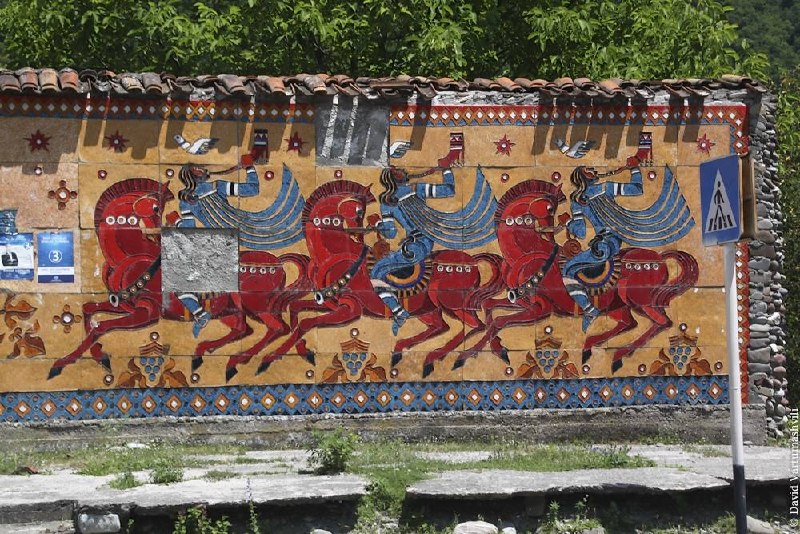
Despite strict state censorship requiring adherence to the canons of socialist realism, artists in the Georgian Soviet Socialist Republic skillfully implemented central directives, prioritizing “national form” over “socialist content.” Thanks to local management of commissions and physical distance from Moscow’s regulatory authorities, mosaics created in Georgia almost never feature traditional and pervasive communist symbols, such as the hammer and sickle, portraits of CPSU leaders, or explicit political slogans. Instead, the works are distinguished by an extraordinary expressive variety, ranging from socialist realism to futurism, from graphic minimalism to total abstraction, offering artists the opportunity to stimulate the abstract thinking of citizens through geometric and conceptual compositions. Mosaic iconography in Georgia focused on celebrating the local historical, literary, and landscape identity. Among the most recurring and significant themes and representations are:
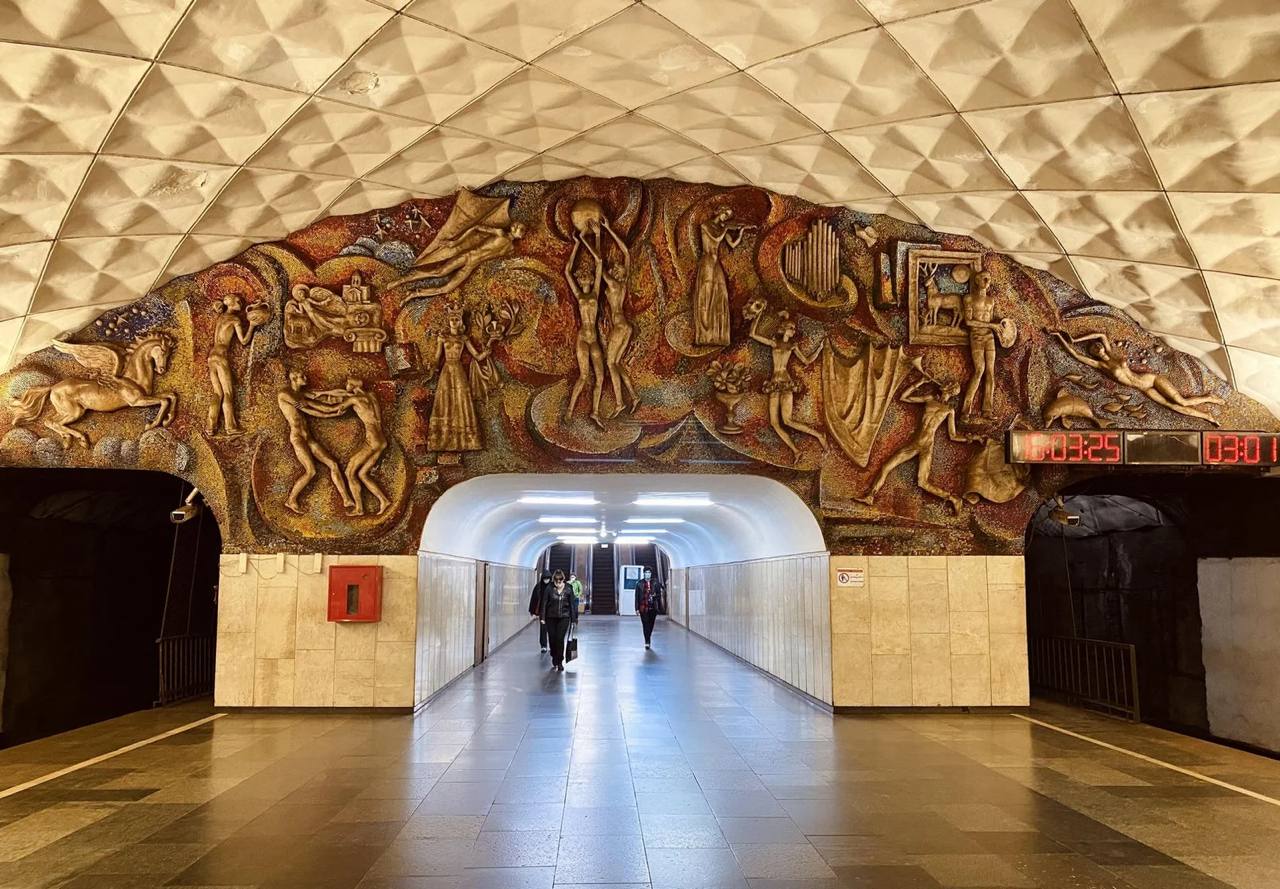
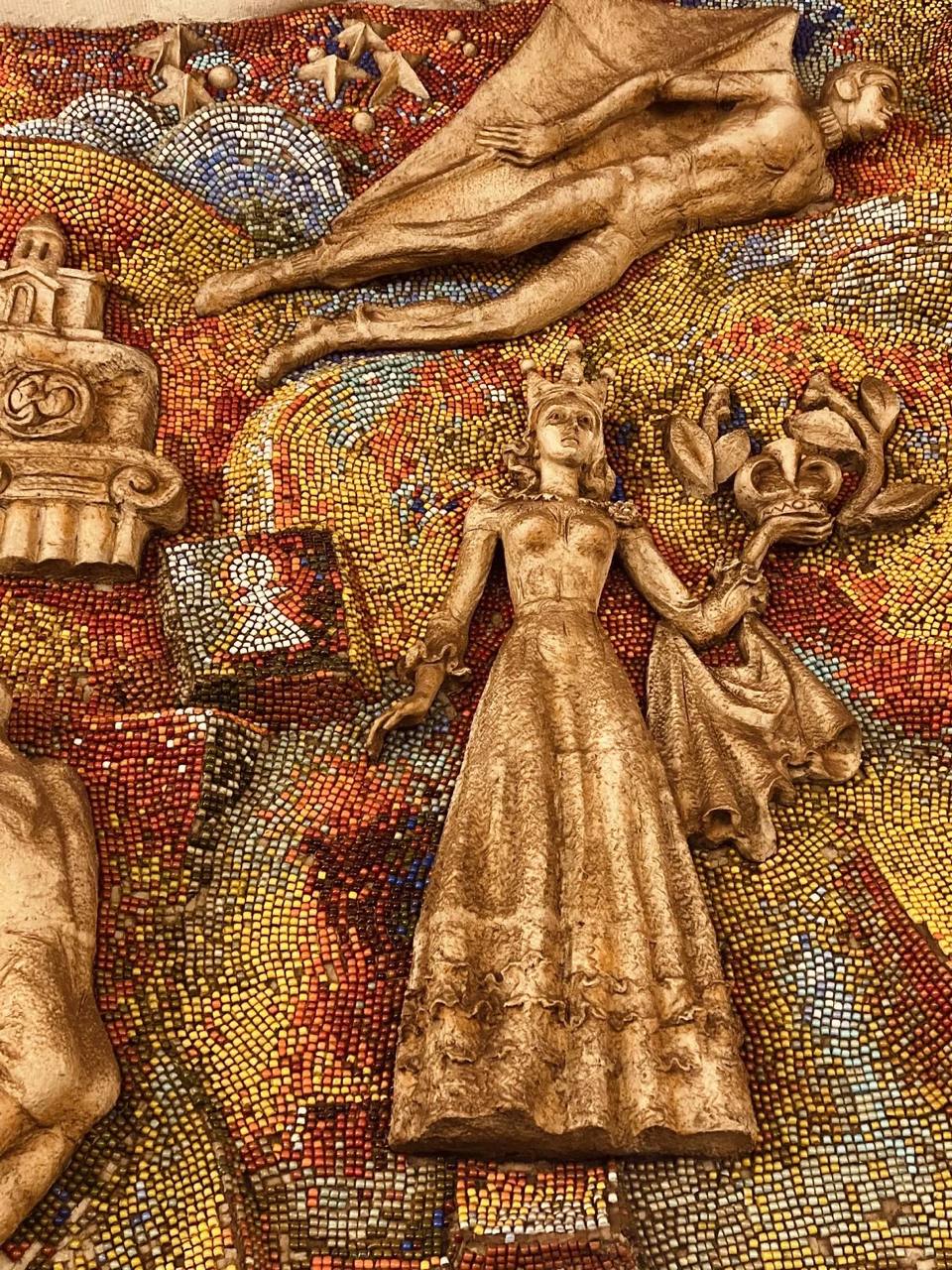
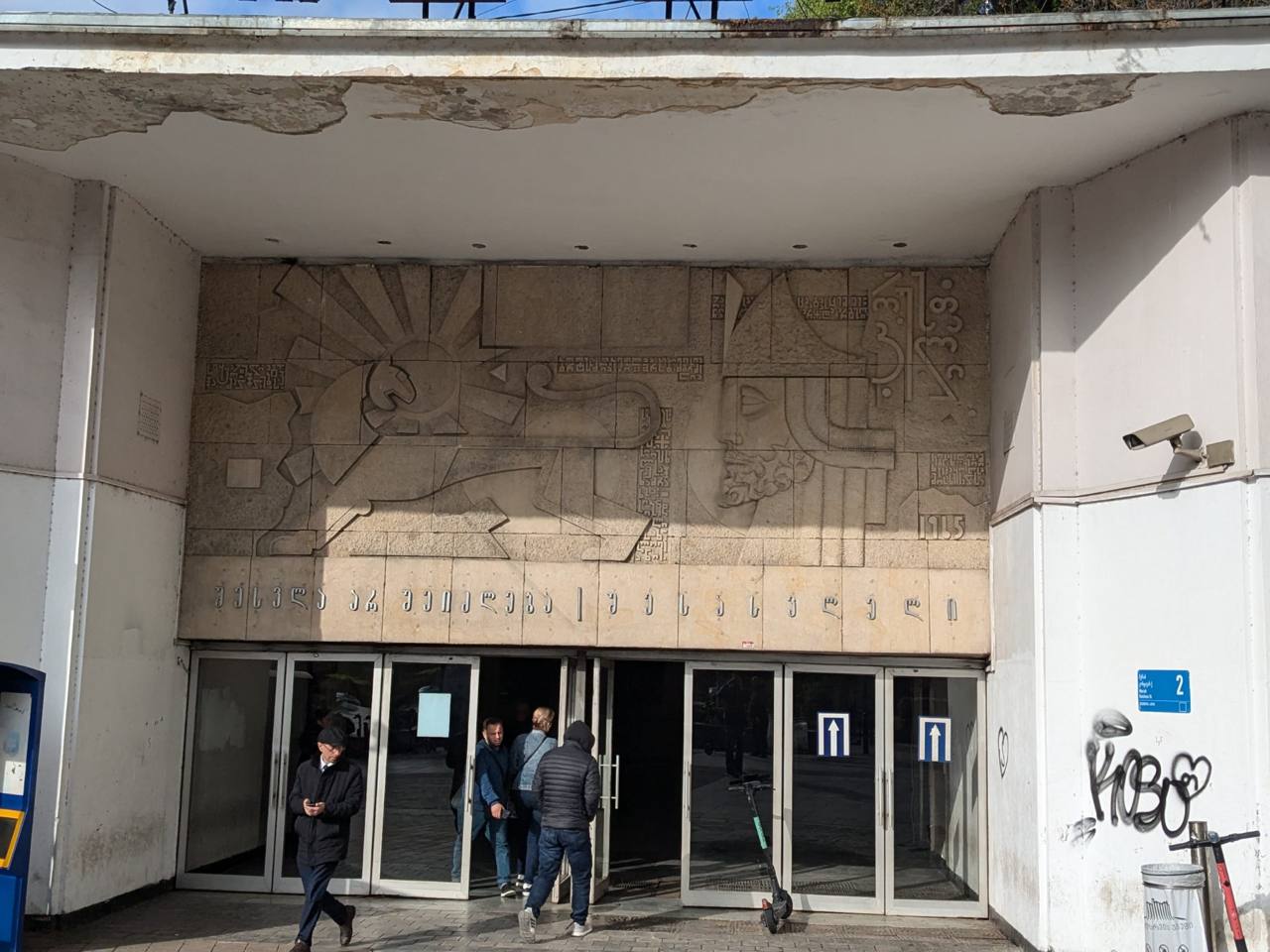
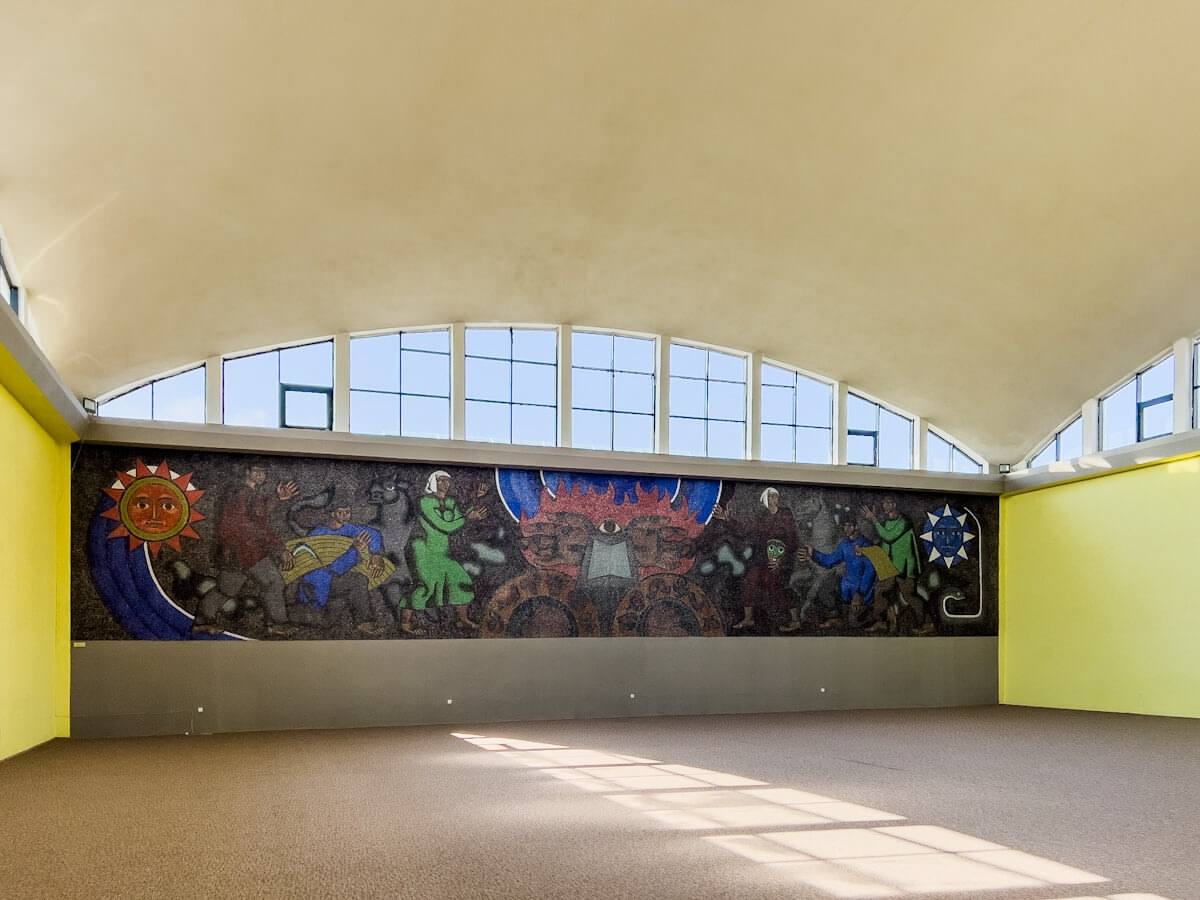
- Literary Epic and Mythology:The large decorative panel with hunting scenes made by Kukuri Tsereteli at the Rustaveli metro station in Tbilisi (1960s) is inspired by the 12th century Georgian national poem"The Knight in the Panther’s Skin"by Shota Rustaveli, whose inauguration coincided with the celebrations for the nineteenth anniversary of the poet’s birth in 1966. At the National Scientific Library in Tbilisi, the monumental mosaic by Nugzar Medzmariashvili (1968-1971) reinterprets the classical myth of Prometheus through its counterpart in Georgian mythology, Amirani, who has always been interpreted as a symbol of the Georgian nation, its historical suffering and its tireless struggle for survival.
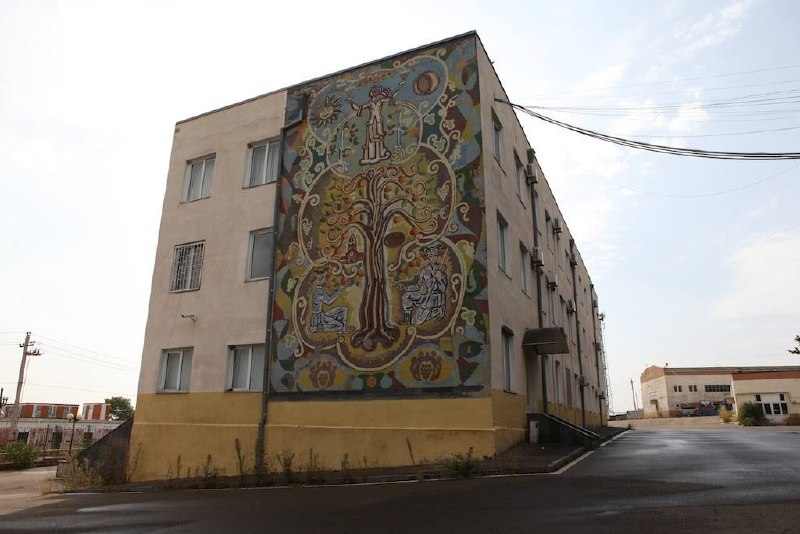
- The Vine and Agriculture:The bunch of grapes and vine shoots represent the most pervasive symbol of identity in Georgian mosaics, regardless of their geographical location. Although in the medieval era the vine was a clear Marian attribute in the sacred iconography of churches, Soviet artists succeeded in effecting a semantic transition, recodifying the image as a secular symbol of agricultural excellence and rural cooperation.
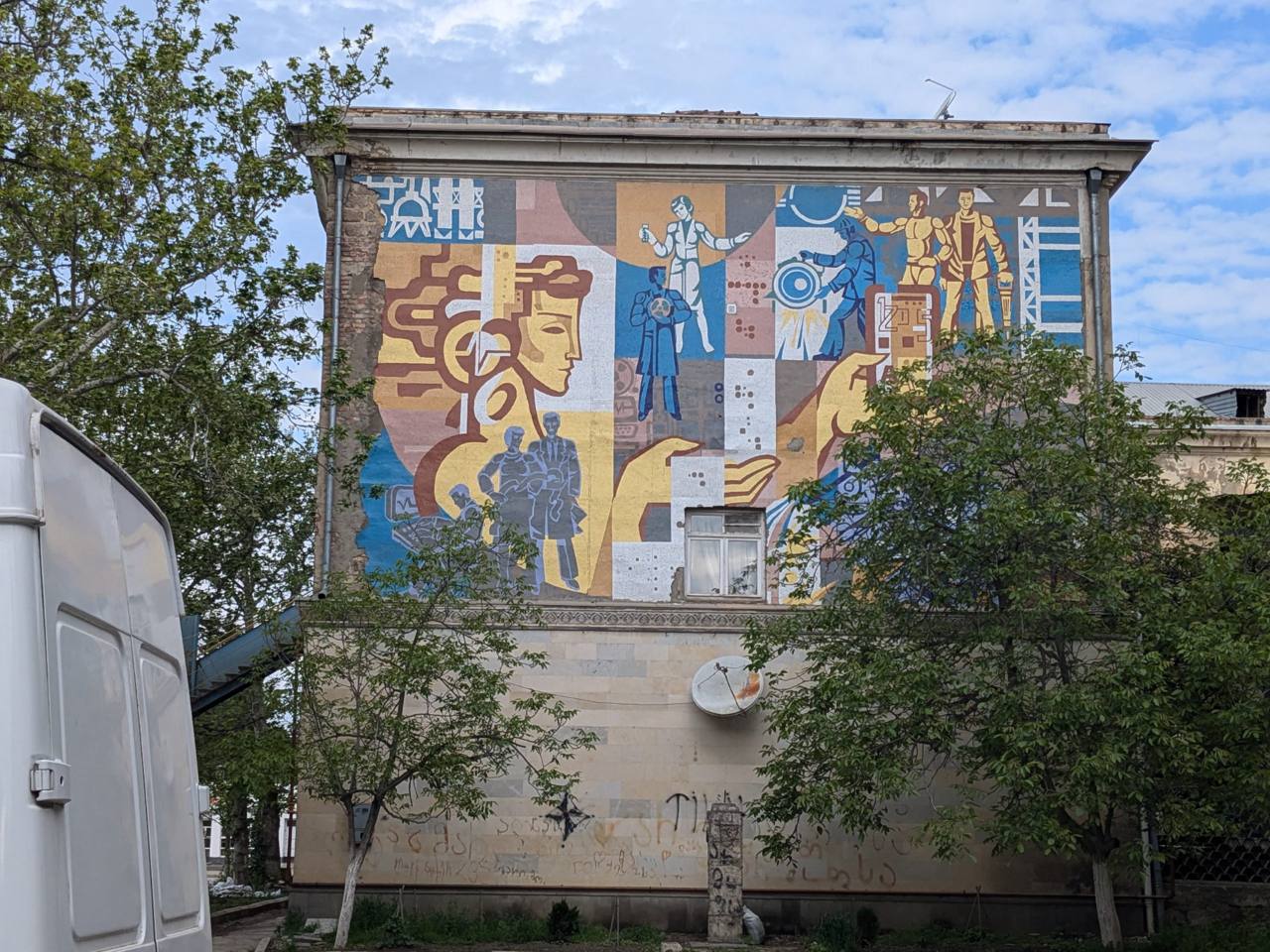
- Temporal Syncretism and the Space Race:The excitement over Soviet space achievements in the 1960s generated a rich iconography of cosmonauts, stars, and spacecraft. However, Georgian artists also drew subtle historical parallels. On the facade of the former VDNKh exhibition center, now EXPO GEORGIA in Tbilisi, a group of scientists, painted in 1963 by Leonardo Shengelia, is depicted. Nearby, another figure emerges, this time a statue of three women holding bolts, atoms, and airplanes, representing the scientific and technological achievements of women as well.
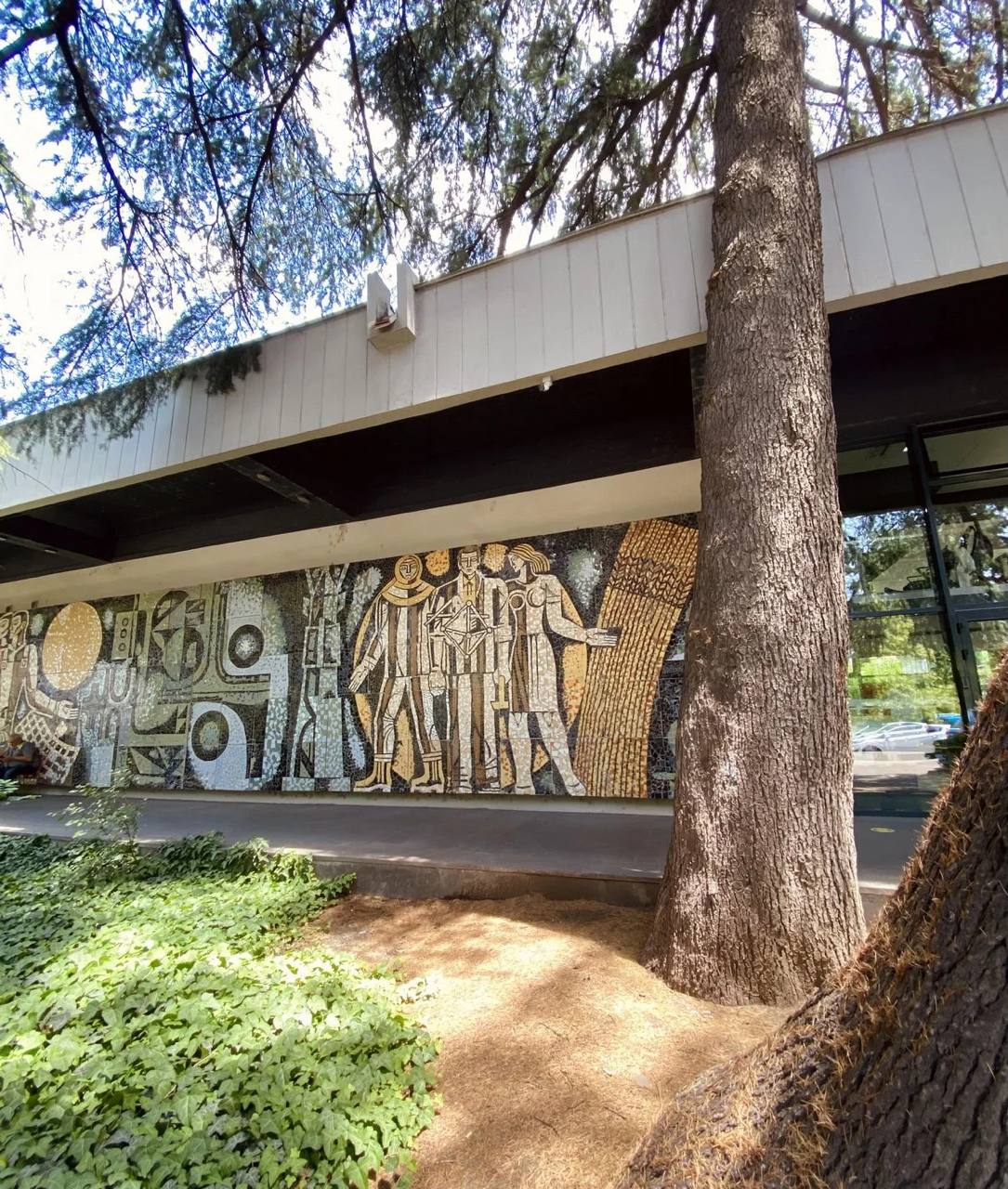
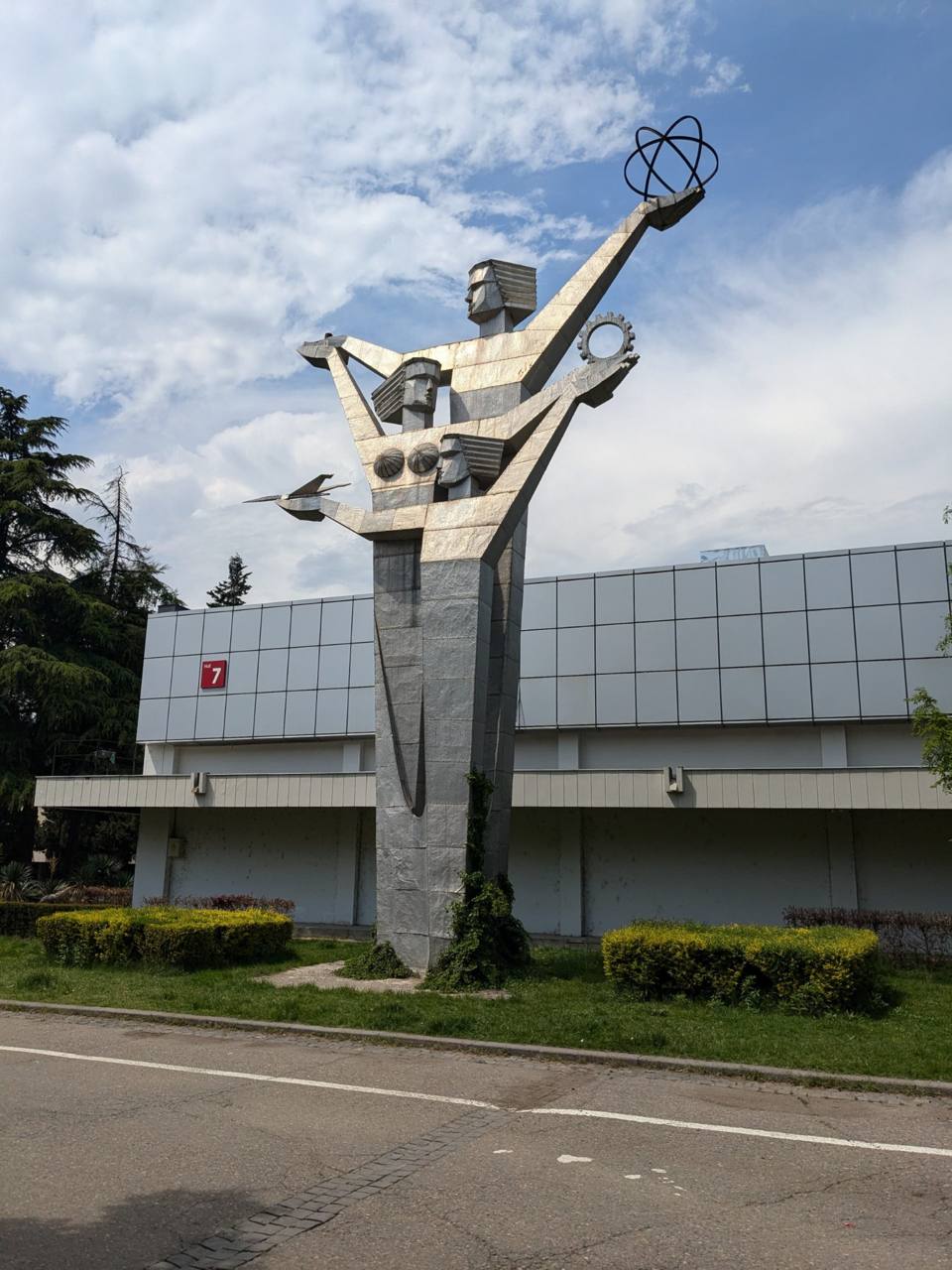
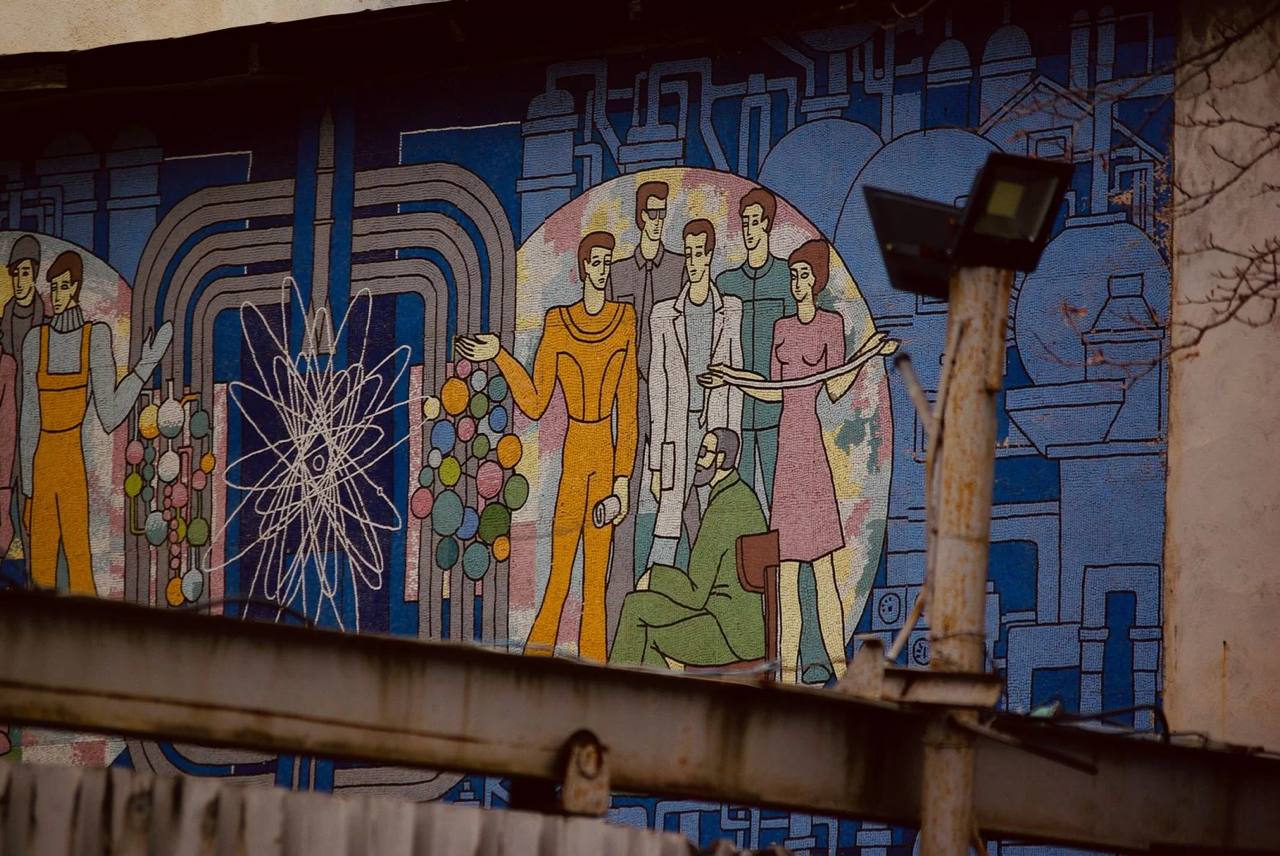
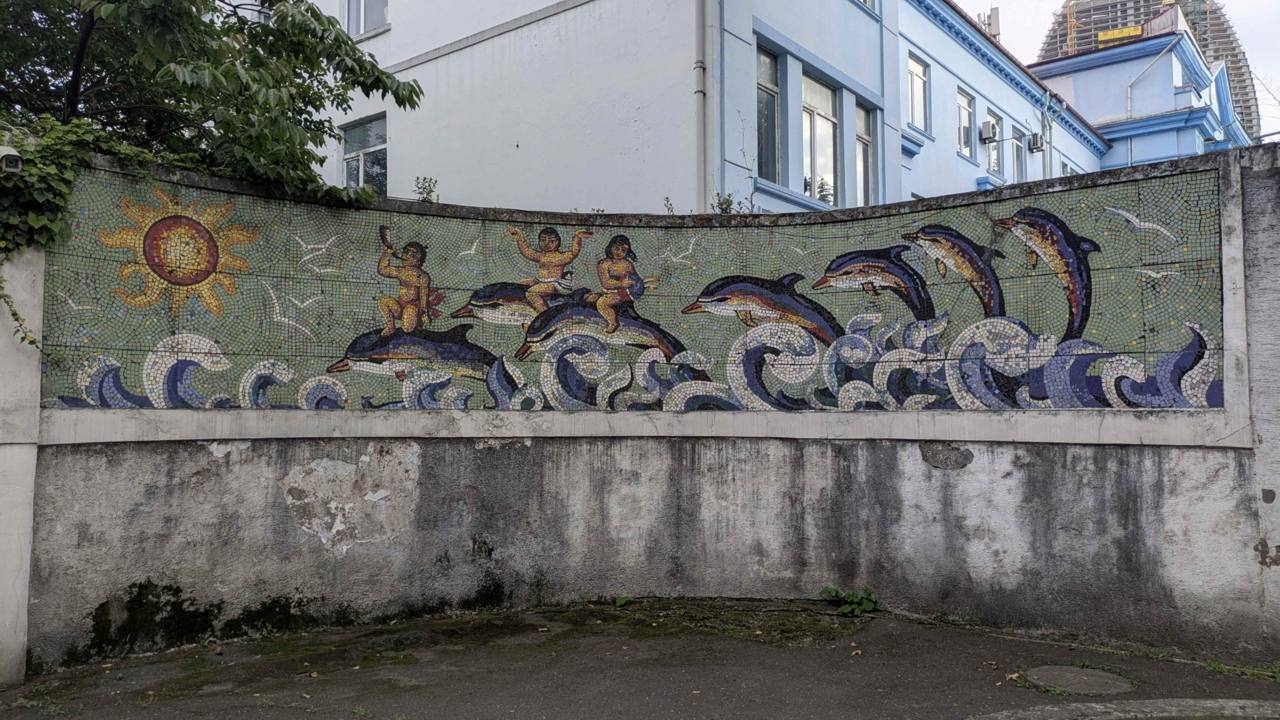
- Regional Characterization:In the western coastal areas adjacent to the Black Sea, mosaics focused on marine themes, aquatic sports, fish, and the mythological figure of Poseidon, also reflecting the ancient historical connections between Georgian Colchis and classical Greek myths, such as the Golden Fleece. In eastern wine-growing regions, such as Kakheti, iconographic attention focused instead on local fauna, viticulture, and agricultural production.
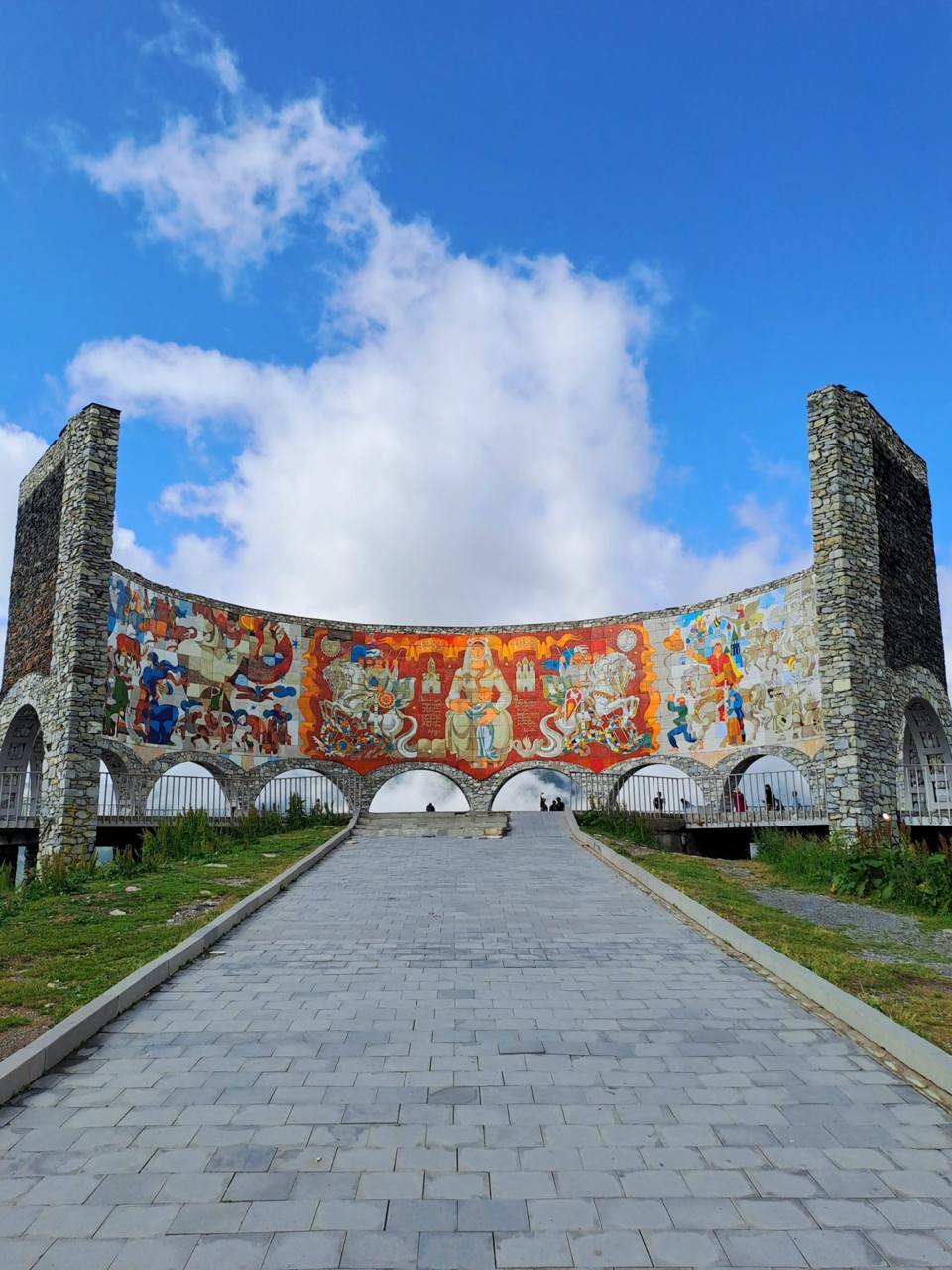
Special attention is deserved by the historic negotiation surrounding the Monument to Russo-Georgian Friendship (also known as the Georgievsk Treaty Monument), erected in 1983 near Gudauri, at an altitude of 2,384 meters, to commemorate the bicentenary of the 1783 treaty. The Treaty of Georgievsk established a protectorate of the Russian Empire over the Kingdom of Kartli-Kakheti in exchange for military protection and respect for internal sovereignty. However, subsequent history proved disastrous for the Georgian side: in 1795, faced with the Persian invasion led by Agha Mohammad Khan, the Russian Empire withheld military aid, declaring war on Persia only after Georgia had already been devastated and initiating the subsequent, complete imperial annexation of Georgian territory. In 1983, the official celebration of this anniversary was greeted with great coldness and open hostility by the Georgian population. Anti-Soviet activists organized protest rallies, and the main underground newspaper of editorial dissent (Samizdat), entitledGeorgian, devoted a special issue to denouncing the historical violations perpetrated by Imperial Russia with respect to the treaty agreements. The monument itself, designed by architect Giorgi Chakhava in collaboration with artist Zurab Tsereteli, features an impressive mosaic interior by Zurab Kapanadze, Zurab Lezhava, and Nodar Malazonia. To mitigate the work’s propagandistic impact, the artists divided the composition into two symmetrical sections: on the left, historical and mythological scenes from Georgia, on the right, Russia. In the center, they placed a mother and child, a universal allusion to future generations whose cultural background was deliberately made undecidable, paraphrasing the sacred iconography of the Virgin Mary with the Child Jesus. The Moscow officials who attended the inauguration were visibly annoyed by this neutral and subtly religious interpretation of the concept of “friendship between peoples.”
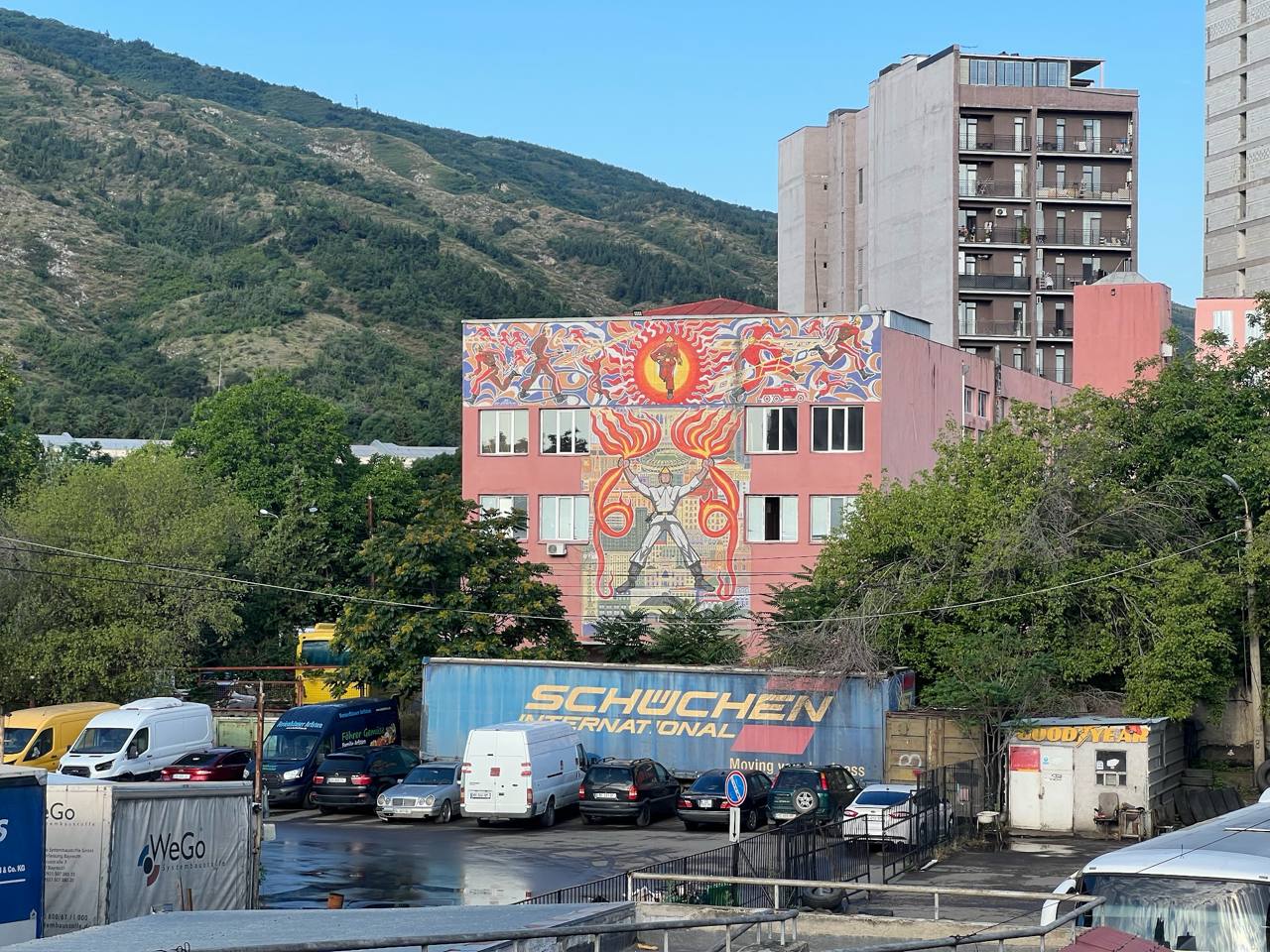
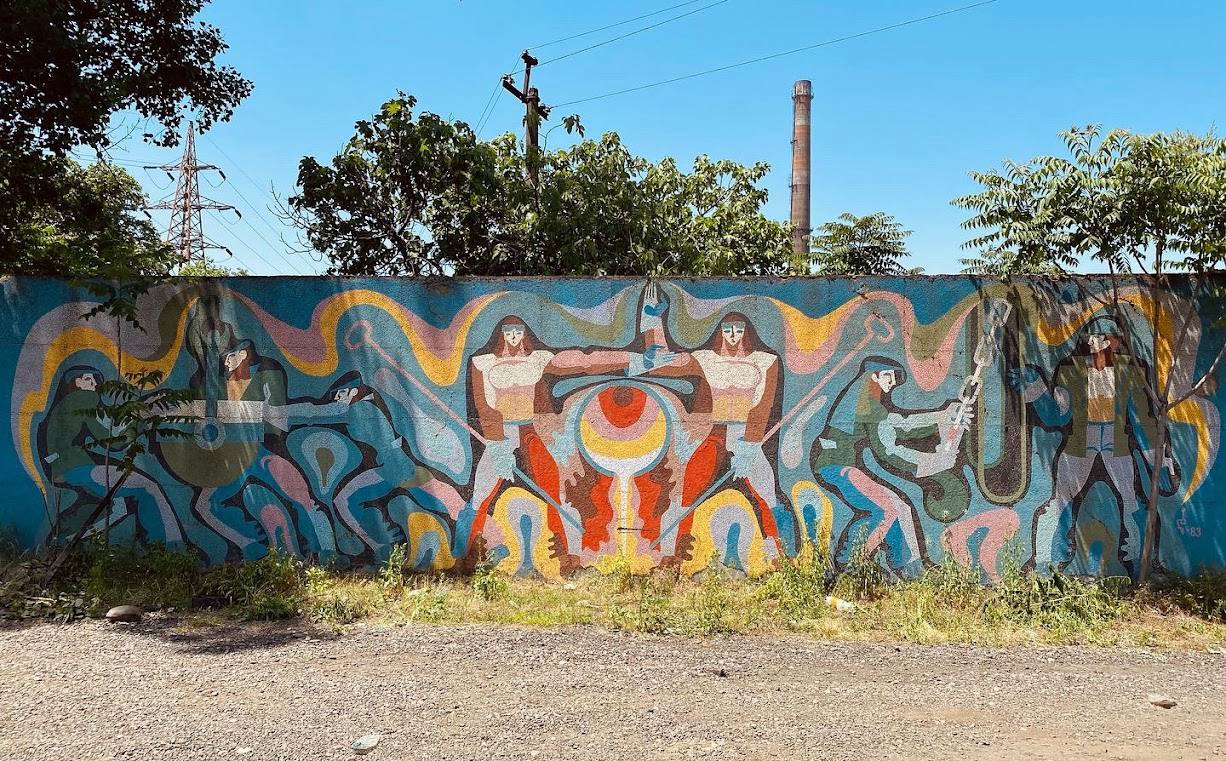
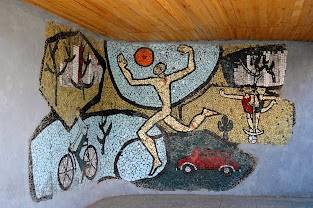
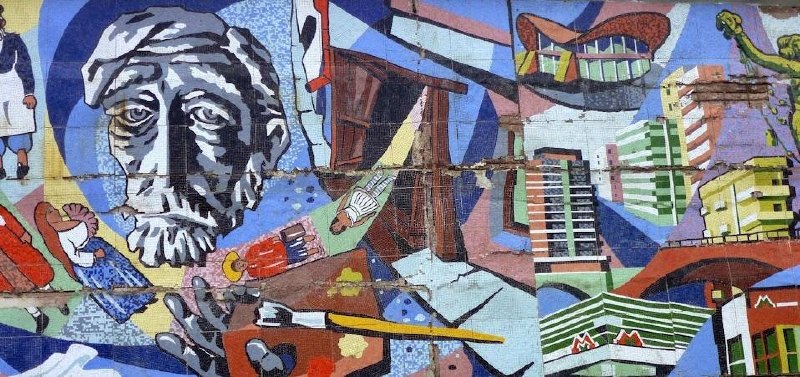
Among the monuments built to commemorate the bicentenary of the Treaty of Georgievsk in 1983, there is a clear typological and monumental diversification, which highlights the large scale of the interventions carried out by the Soviet regime that year.
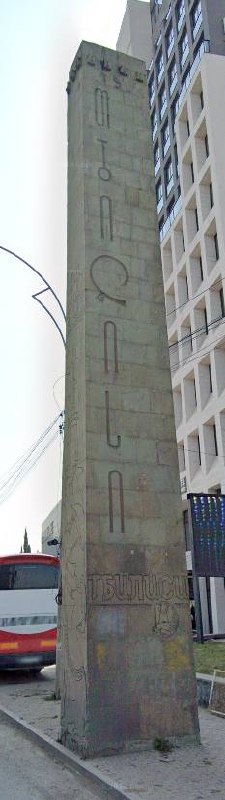
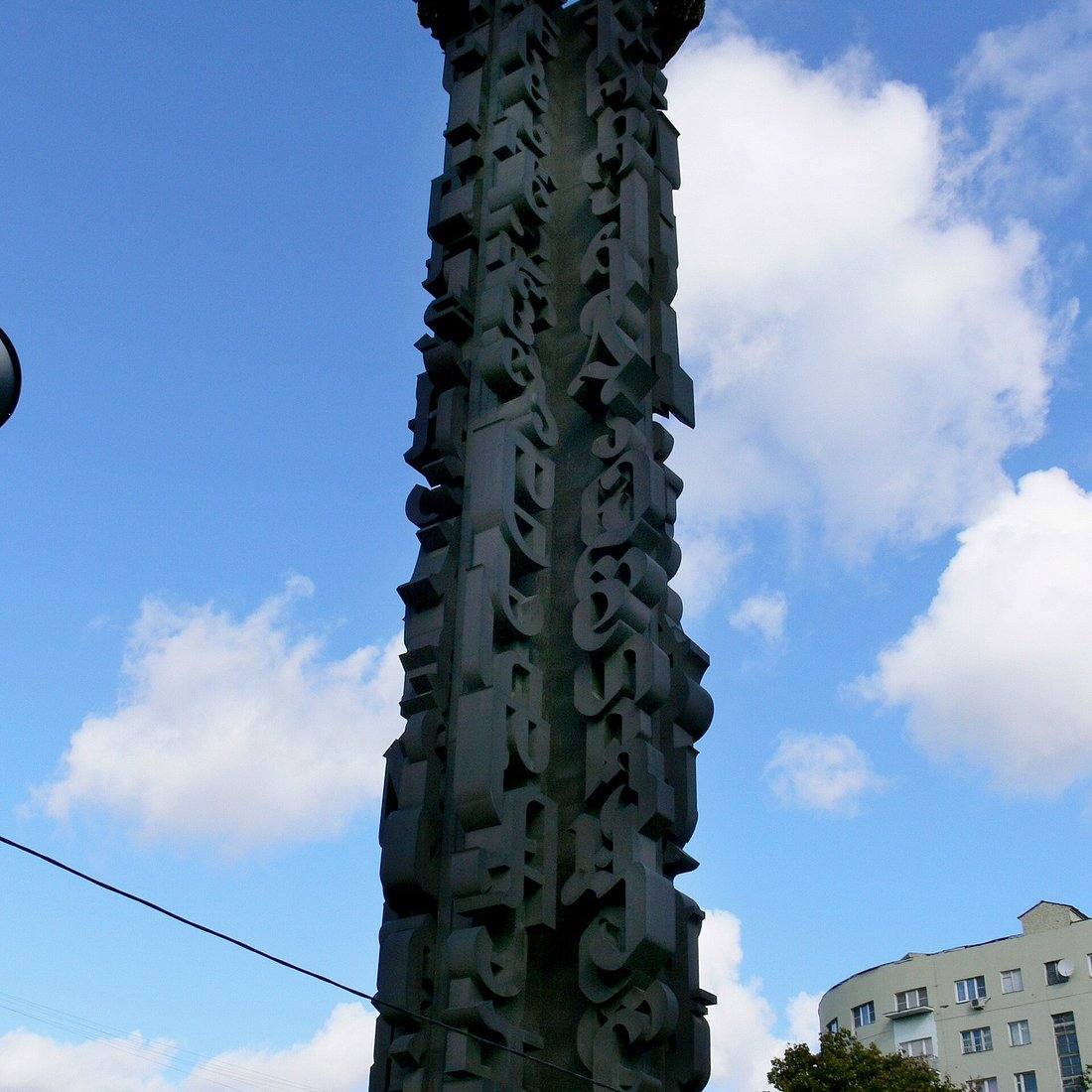
Technological Developments and Innovation in Monumental Cloisonné
From the point of view of materials, mosaic production in Georgia was clearly divided between the use of local natural stone and glass enamel (enamels) imported. Enamel, defined as an opaque glass alloy fired at very high temperatures and broken into small geometric pieces, guaranteed extraordinary resistance to wear and tear over time, preserving the expressiveness and chromatic brilliance of outdoor installations. Most of this material was imported into Georgia from Ukraine and the Baltic countries, then worked and shaped on site by the Union’s artists. However, the most significant and original technological contribution developed on Georgian territory is due to the collective of artists composed of Zurab Kapanadze, Zurab Lezhava e Nodar MalazoniaThis group applied for the first time on a monumental scale the traditional decorative technique of cloisonné smalto (historically reserved for the production of small-scale sacred goldsmith objects), replacing standard mosaic enamel with special tesserae of colored, fired glass, separated by thin metal partitions to define the outlines of the designs. This invention, which allowed for the creation of extremely complex and stable color schemes, was duly patented and granted an official intellectual property certificate in the USSR.
At the same time, the architect Giorgi Chakhava. He began fruitful research on thin-shell reinforced concrete structures, inspired by the innovative engineering technologies pioneered internationally by Pier Luigi Nervi. Chakhava created his first shell structure in 1961 for the Alushta bus station, subsequently evolving his designs towards complex organic and biomorphic forms. In close collaboration with engineer Zurab Jalaghania and the mosaic collective of Malazonia, Kapanadze, and Lezhava, Chakhava designed a series of unique street and recreational pavilions, conceived as functional sculptures integrated into the surrounding landscape. Each of these pavilions was distinguished by its unique form and extraordinary geometric fluidity, serving as an experimental laboratory free from interference from Moscow’s urban planning authorities.
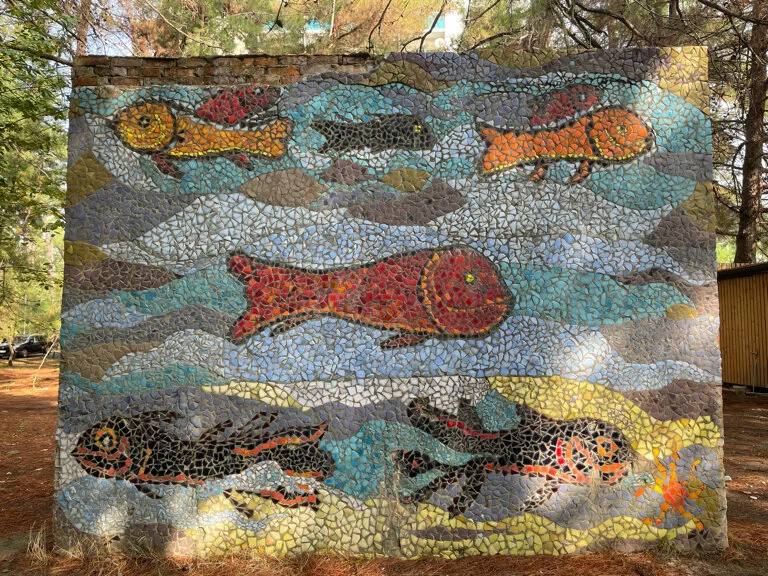
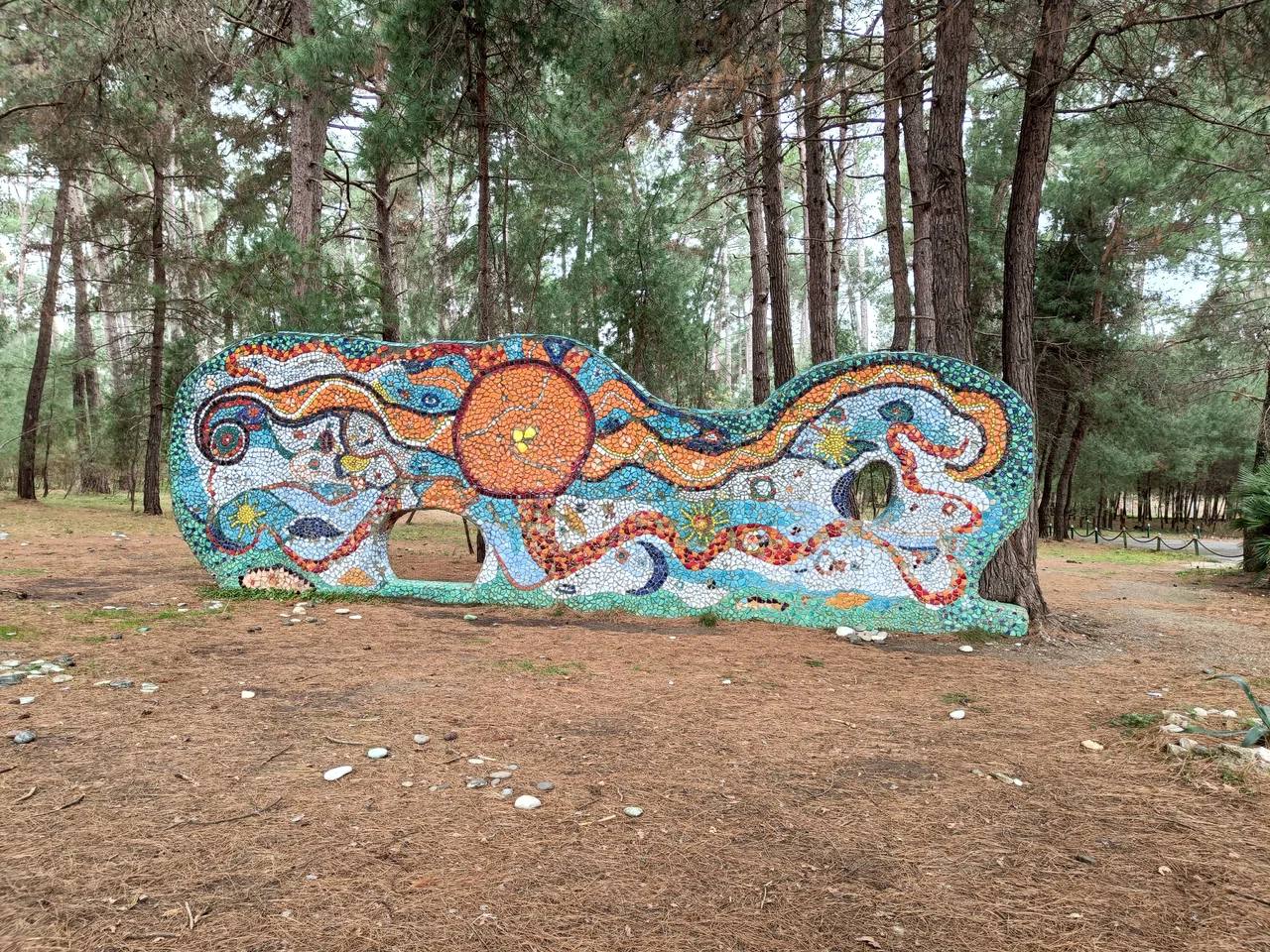
Case Studies, the Conservative Crisis, and Civic Activism
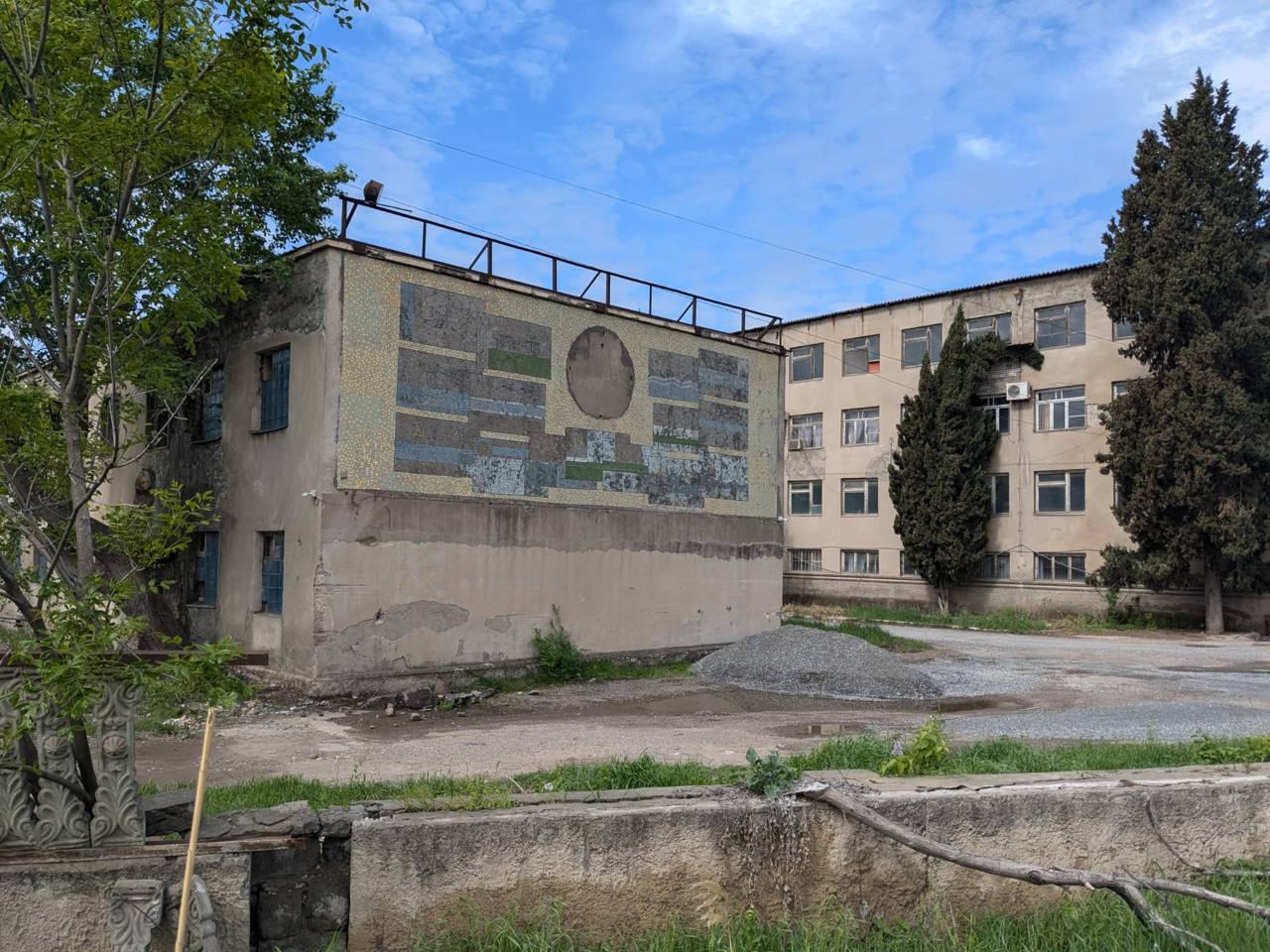
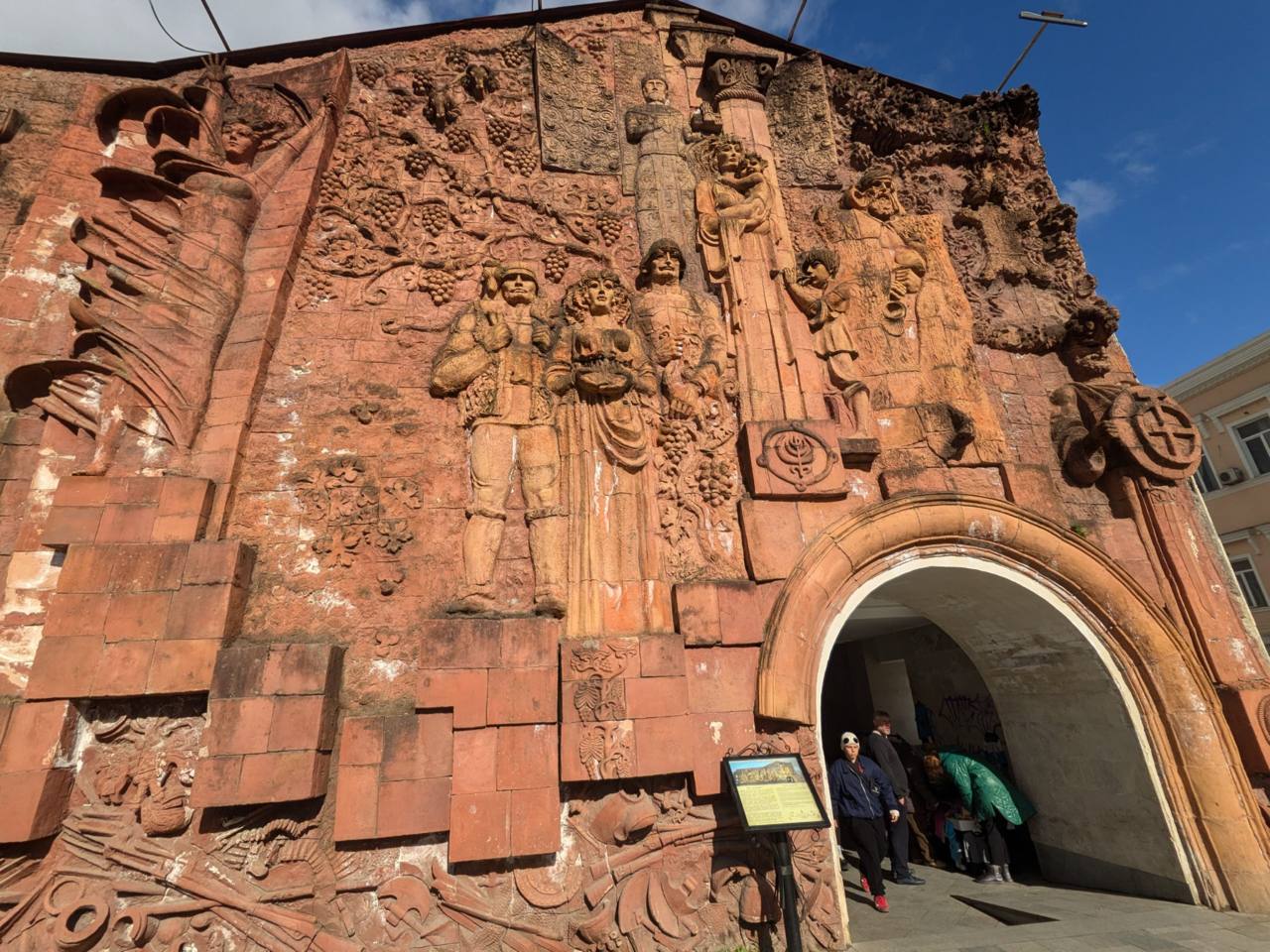
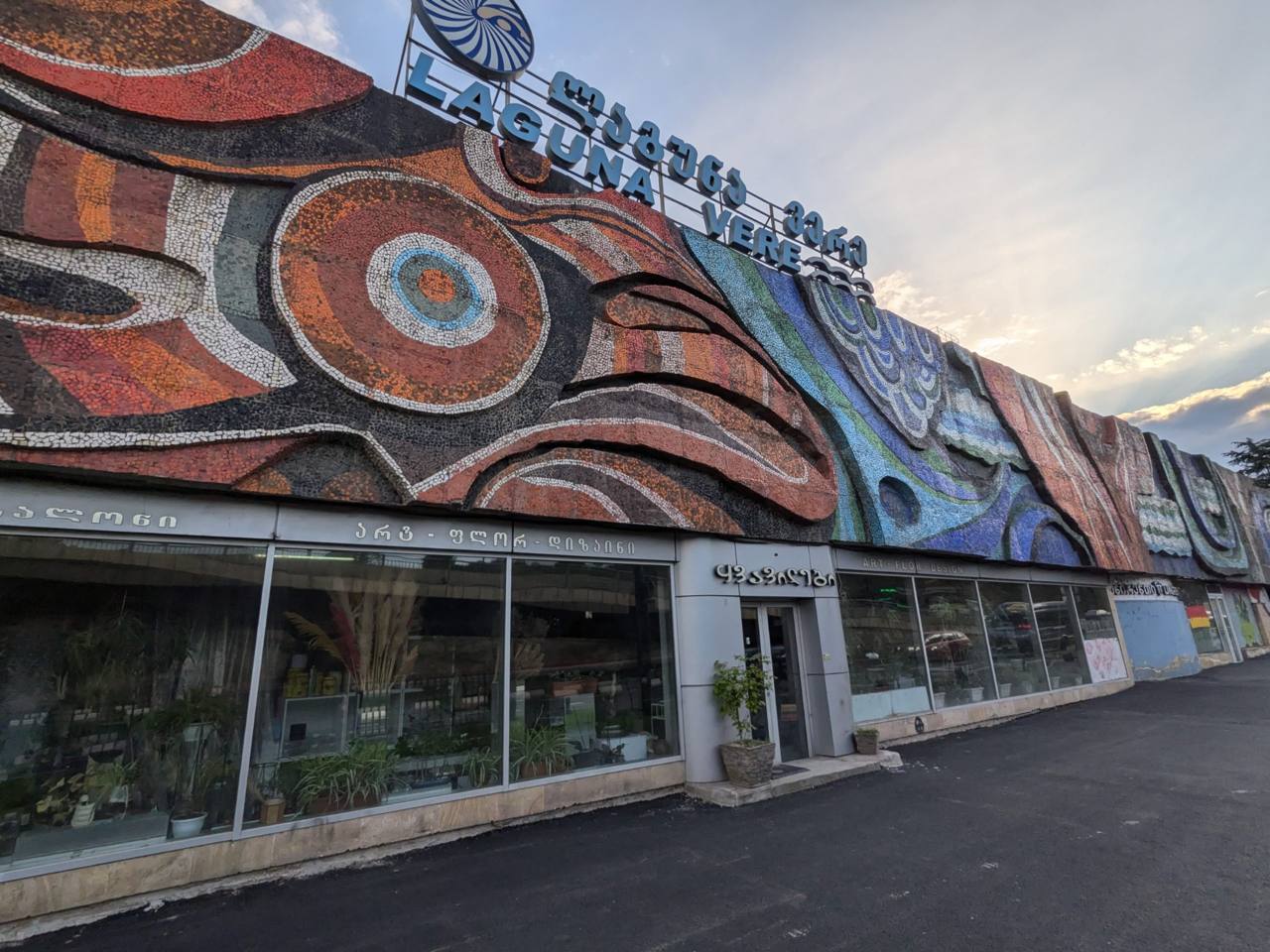
The dissolution of the Soviet Union in 1991 plunged Georgia into a period of profound political instability, economic recession, and armed conflict, resulting in the state’s complete disinterest in protecting its late-20th-century monumental heritage. The lack of legal protections favored the systematic destruction of numerous works of art. Many public buildings decorated with mosaics were privatized without imposing any conservation restrictions on the new owners. In this context, uncontrolled urbanization and private speculative interests led to serious acts of building vandalism. A emblematic case occurred in Tbilisi, where a local meat processing company cut a mosaic of considerable historical and artistic value in half to open a passageway and install an aluminum door intended for a guard booth, an intervention that met with complete silence from the capital’s municipal inspectors. Similarly, on Chkondideli Street in the Nadzaladevi district of Tbilisi, windows and doors were created by directly breaking through a historic mosaic panel. Restoration management has also sparked heated debates over the preservation of the structural authenticity of late-Soviet works. In the case of the famous “Fantasy” Café in Batumi, the structure (which had been abandoned for years and threatened with demolition in 2012 by a private developer) was saved thanks to intense protests from civil society. However, the restoration carried out between 2017 and 2019 raised strong criticism from the scientific community: the original enamel surface was entirely removed and replaced with new tiles, based on a free interpretation of the restorers’ chromatic palette, while the complex integrated water system that sprayed cold water onto the dome was removed, nullifying the physical authenticity of the artifact. The fate of the Laguna Vere sports center in Tbilisi, designed in 1978 by architects Shota Kavlashvili, Guram Abuladze, and Ramaz Kiknadze, and decorated with Koka Ignatov’s monumental linear frieze, remains entirely uncertain. The aquatic complex, privatized in 2000 and closed in 2014 due to lack of commercial profit, was further devastated by the 2015 flood. Because the area is entirely privately owned, attempts to include the structure in the list of national historical heritage monuments have so far failed, exposing the country’s longest mosaic to the permanent risk of total decay or demolition. To stem this systematic loss of visual memory, several Georgian cultural figures have initiated a major community cataloging and preservation effort. In addition to the pioneering work of Nini Palavandishvili, supported in archival research by Sophia Lapiashvili, Lena Prents, Gogita Bukhaidze, Tamara Bokuchava, and Nino Siradze, civil society has promoted grassroots restoration projects. In particular, the “Saving and Restoring Mosaics as Historical Heritage” project (launched in 2024 at the Zugdidi Art Craft Center with funding from the European Union and UNDP) enabled the difficult restoration of three historic mosaics in the Samegrelo region, addressing complex challenges due to the proliferation of fungal bacteria and the instability of the walls. Similarly, the intervention of the foundationRibiraboIn Saguramo, it helped preserve two privately owned mosaics at the entrance to an industrial warehouse, convincing the owners to build special protective metal frames to integrate the historic panels into the newly renovated structure. Geographically, the state of conservation and distribution of late-Soviet mosaics remain fragmented. Numerous high-quality installations, though damaged, survive in abandoned industrial centers and marginal rural areas, creating a geographical map of Georgian monumental memory.
Conclusions
The monumental mosaics of the Soviet period in Georgia constitute a historical and artistic heritage of exceptional importance, poised between formal adherence to ideological commissions and a profound and conscious quest for independent national expression. The adoption of innovative technical solutions such as monumental cloisonné and the sculptural integration of mosaics into biomorphic concrete structures demonstrate the level of absolute engineering and formal excellence achieved by Georgian artists of the late twentieth century. The progressive loss of these works, caused by property speculation, uncontrolled privatization, and widespread ideological indifference, represents a serious mutilation of the nation’s visual and historical memory. It is essential that Georgian cultural institutions initiate a new and comprehensive preservation policy, including a systematic inventory of surviving installations and their formal inclusion in the register of national monuments of tangible cultural heritage, imposing rigorous conservation restrictions even on private property. Only in this way will it be possible to ensure the preservation of these extraordinary testimonies of artistic modernity and allow for a critical, calm, and scientifically grounded rereading of the complex history of twentieth-century Georgia.
Other works: