The emigration phenomenon from Georgia to Italy: Nina Ilarishvili’s story
From Georgia to Italy: the quiet journey of a female migration
Over the past twenty years, Italy has become one of the world’s leading destinations for migration, reaching in 2017 the fourth ranking in Europe for immigrant population. Among the countries that have played a significant role in this phenomenon, alongside nations long associated with emigration such as Albania, Morocco and Romania, stands another state that is not geographically close to the Italian peninsula: Georgia.
Following the collapse of the Soviet Union in 1991, Georgia encountered a prolonged period of political and economic instability. Unemployment, low wages and recurring territorial conflicts pushed many citizens to seek abroad those opportunities that their own country struggled to provide.
At the same time, starting from the 1990s Italy faced what many observers described as a “family welfare crisis.” As life expectancy increased and the population aged rapidly, a growing number of families found themselves responsible for caring for elderly relatives who were no longer self-sufficient. The state, however, failed to develop an adequate public system of services: places in residential care facilities were limited, expensive and often culturally rejected by families, who continued to prefer care within the home.
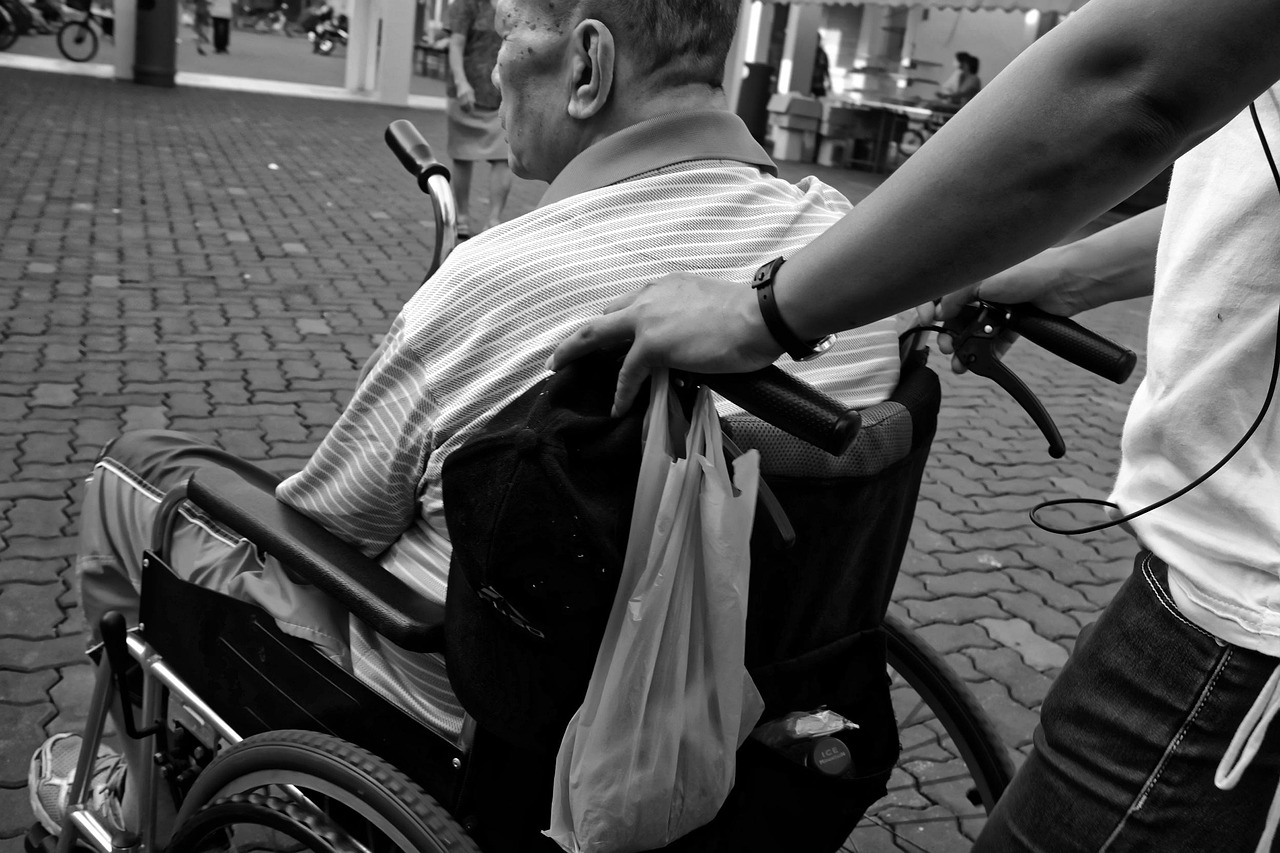
These circumstances favoured the rise of a new professional figure that would gradually become central to the Italian welfare system, while remaining largely on the margins of formal institutional recognition: the live-in caregiver. Workers from Eastern Europe and the Caucasus, including many Georgians, fit this demand perfectly. They were available for cohabitation, willing to work long hours, and widely perceived as reliable and dedicated to care work.
As a result, many of these women, despite holding university degrees or possessing significant professional experience, chose to accept such employment. For some it was intended as a temporary strategy; for others it was an economic necessity. Even though wages were often low by Italian standards, those earnings represented a crucial resource for supporting families who had remained at home.
In this way, Italy managed to absorb the pressures of an ageing population without making major investments in public services, instead developing a structural dependence on migrant labour. In the case of Georgian migration, the link with care work has grown so strong over the years that it has shaped the very profile of the community in Italy: a predominantly female migration, stable over time, yet marked by personal sacrifice and limited opportunities for social mobility.
In touch with reality: Nina Ilarishvili’s story
We have had the pleasure to interview a witness of emigration from Georgia to Italy, that among challenges and difficulties, experienced first-hand what it feels like to drop everything off and leave towards an unknown land: Nina Ilarishvili.
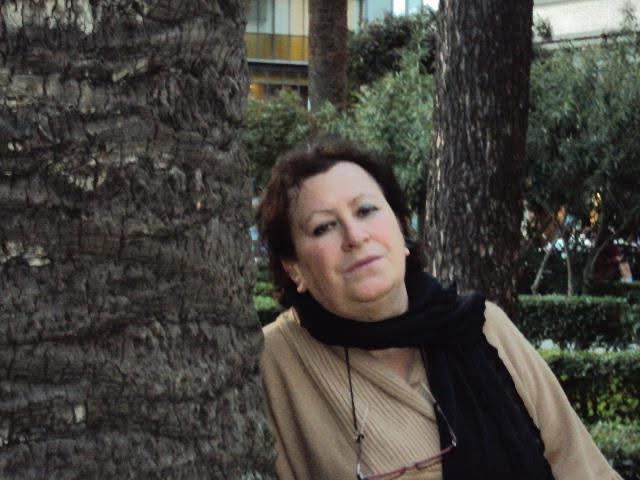
To understand better what has Nina been through, we have asked her seven questions:
Which was the reason behind leaving Georgia? Why Italy?
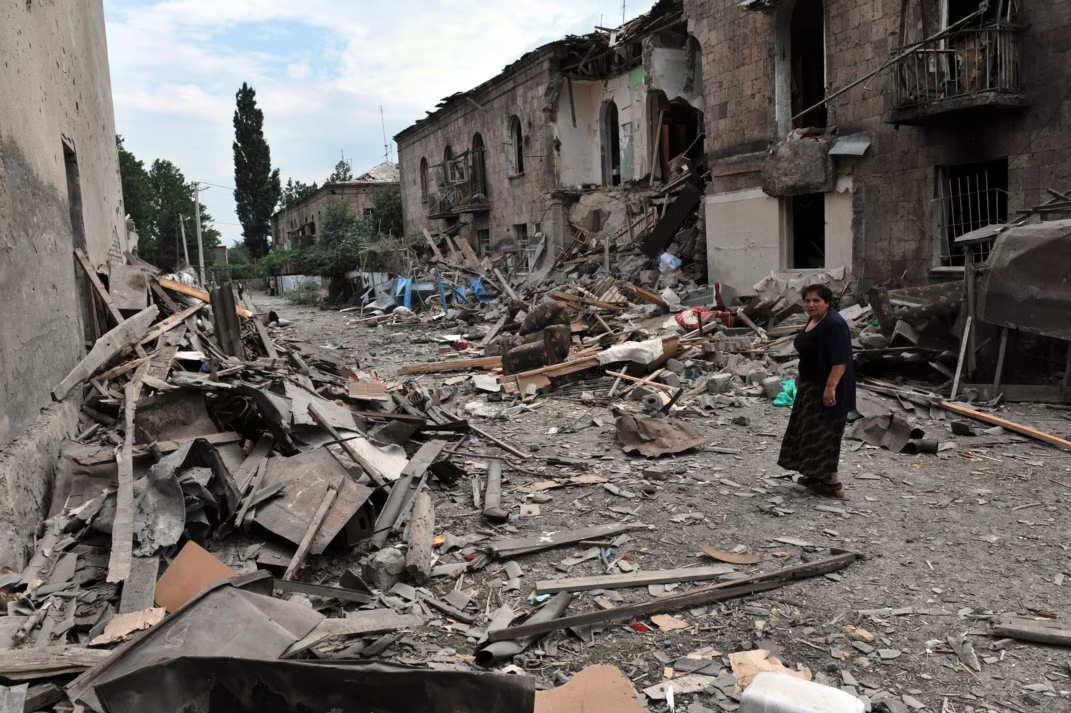
“I left Georgia because of the difficult economic situation caused by the collapse of the Soviet Union. I was working at the music schools in Khidistavi and Eredvi. During the economic hardship, both schools began to experience a large decrease in children and students (since attending required payment). However, in Eredvi comparatively more students were studying (it was a large village). Between 1991 and 1992 the war began, Eredvi was bombed by Russia, the school was burned down, and therefore many residents moved to Gori, including me and my husband. Soon after moving he started working in a construction office as an engineer, but because of tiring political unrest, he began working at the bazari. It was very difficult to survive or even to find even basic work; to stand on one’s feet economically at a minimal level was impossible, therefore to overcome the hardship I decided to emigrate.”
“I chose Italy, because I had a relative that was already there as an emigrant, working as a caregiver; she used to describe working and living in Italy as economically good and beneficial. Because of these reasons (most of all, her raccomandation) I chose to persue this path.”
Was it difficult to settle down? If so, which were the major difficulties?
“In the beginning I had some issues with acclimatization and not knowing the language. Because I did not know the language even at an elementary level, it was difficult to communicate with people, a real challenge. Georgian writing and Italian are very different from each other, therefore it was very hard for me to adjust and start everything from zero, even to have easy communication.”
“In the family where I first started working, initially I had some problems adjusting, but then I enterpreted the role as if I was caring for my own parents. At the time, I was taking care of an elderly couple. The working conditions were very difficult, considering that the elderly people did not sleep at night, so it was impossible to sleep for me too. I sadly remember 2008, the days of the war when Russia bombed Georgia, as especially difficult. It was emotionally hard to be far away and watch from Italy, on television, how Gori (the city where all my family members lived) was being bombed. However, I also remember how, during that hardship, my employer’s family stood by and eased my pain.”
“It is noteworthy to remember that at first I did not have any documents, therefore I was living everyday activities such as going outside and communicating with people, under constant fear. Because of this, I could not return to Georgia either, and this situation remained unchanged for a long time. After several years I finally obtained documents and after 5 years and 5 days I managed to returned to Georgia for the first time. Of course, being away from family was an extremely big and difficult factor, especially when the world was not so digital. At that time we did not have a computer and I could only contact my children by telephone, seeing them only in videos recorded on CDs sent by her family (which later changed to Skype, and then to Messenger, which is now part of everyday life). I had 1 hour allocated every day to talk on the phone (the family that I was taking care of bought her 5-euro cards), but during the war, they bought me a 100-euro card so that I could “call my family every minute”.”
In everyday life, she encountered some other difficulties with cultural differences, for example fixed meal times, which Georgians are not really used to. Adapting to a factor that undoubtely changes your whole routine, was in the beginning a pretty big issue for her.
How long did it take to find a job? Did the environnment match your expectations?
I found my first job pretty quickly, and when the person I was taking care passed away, my relative would help me find new workplaces, so overall I did not have many difficulties on that side. I’ve worked in Bari for over 14 years, and spent 11 years and 9 months in one family. I was taking care of this grandma, and ended up spending almost 12 years with her; I really wanted her to turn 100, but unfortunately she did not make it, passing only one month before her birthday. It was difficult to leave her, we loved each other very much.”
“Emotionally it was not that hard to stay in Italy, as, in some ways, Italians and Georgians share common character traits: they are energetic, communicative and loud.”
“Despite everything, I imagined Italy differently but with time I managed to adapt pretty well. In the beginning I was living in constant fear towards everything and everybody. When you are far from your country and family, leave your children and grandchildren, not knowing the language, it is very difficult to estabilish yourself. The fear of not managing to adapt was always there, but thanks to my character and the warmth of all the families I worked with in Bari, I managed to adapt properly.”
Has learning italian been easier or harder than expected?
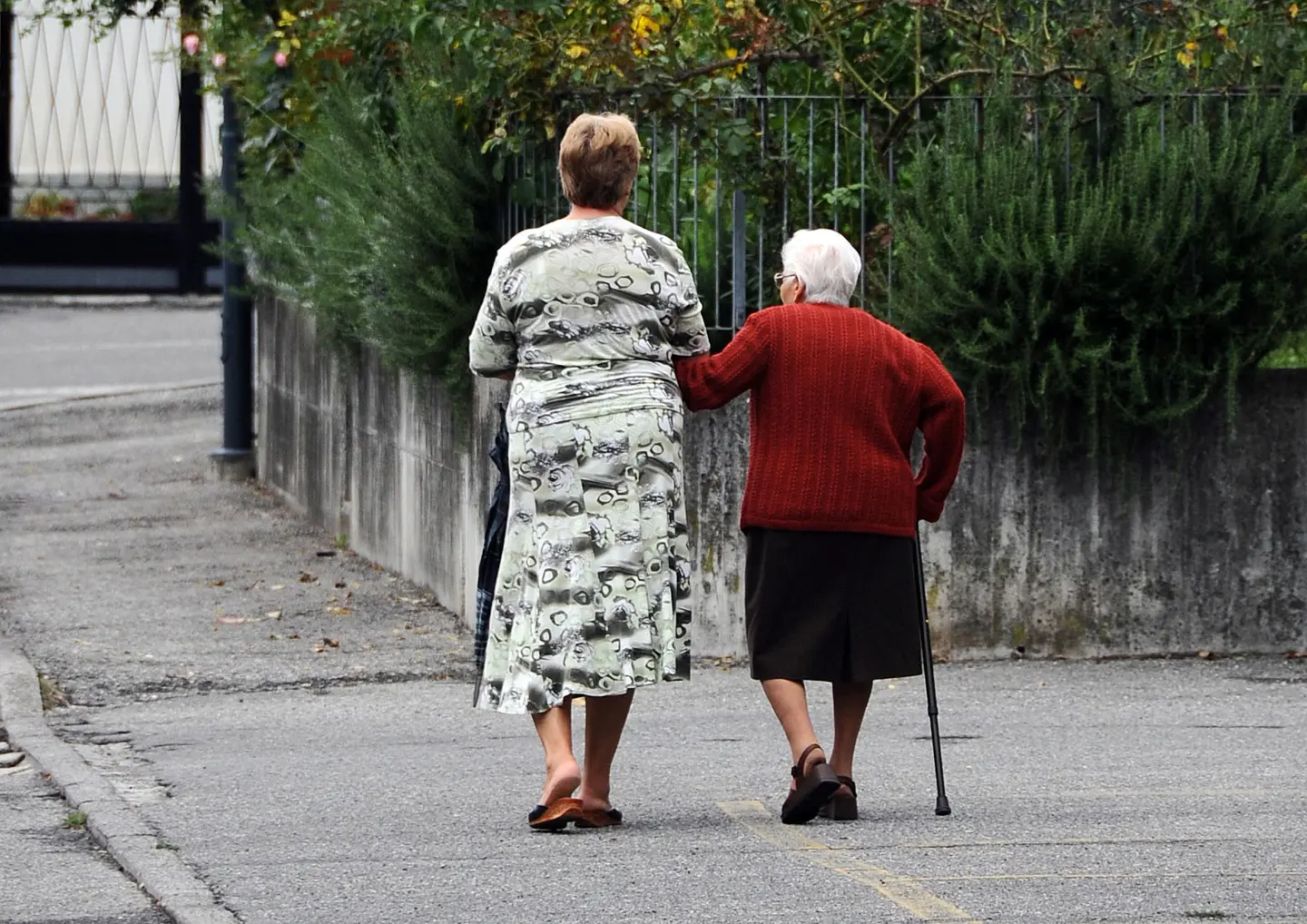
“It has been pretty challenging, because I spent most of the time with elder people, often affected by Alzehimer or other complications due to old age; sometimes the did not even want to speak. In addition, many of them only spoke dialect, which made my learning process even harder… I’ve learnt an “imperfect” Italian. Nowadays there are many Georgian-Italian schools, but at the time I arrived, there were none. Also, spending most nights awake dealing with the elderly, it was impossible to find the energy and properly study the language.”
If you could go back in time, would you go down the same path, or choose to do something else insted?
“If the economic circumstances were to be the same, I would definitely choose the same path I went through, despite all the difficulties. However, I would not suggest my children to go to Italy as caregivers.”
In which ways does Italy reflect Georgia?
“Italy is similar to Georgia in emotions and expressiveness. If they love you, it is very difficult for both sides to separate from each other. If they see that you’re loyal to family, they accept you like their own family member. They are warm and emotional in everything, just like us; accepting, communicative and very loud when they speak.”
In the close future, could you ever go back to live in Georgia?
“Yes, a very long time has passed since I left my homeland and I’m obviously not the same age as I left, and even though Georgia is my homeland it will be very difficult for me to leave Italy, as it has become my second homeland…”
What is left to intend is that, despite the great love for Italy, she will much probably return to Georgia, even though it will be another great challenge to adapt back to her original homeland.
The story that has been told in this interview is just one of the thousands that connect today Georgia and Italy. A silent flow of workers and families, that have redesigned, over decades, the relations between the two countries.
What stays, in the end, is a question that many migrants know pretty well: how long can you go on living in two houses, without beginning to feel like you don’t belong anymore in any?