Asbestos in Georgia - A Forgotten Emergency
Asbestos: one material, many uses. For millennia, humans have used this remarkable substance to meet a wide array of needs. In fact, its inherent properties make it extremely versatile and suitable for use in many different contexts. Unfortunately, behind its impressive characteristics lies a truth that is now widely known, yet inconvenient for those who still profit from it.
It was in 1977 that the International Agency for Research on Cancer (IARC) published its official report finally confirming – more than 50 years after the first documented case of asbestosis that of Nellie Kershaw – that asbestos, in all its forms, is definitively recognized as carcinogenic to humans. Over the years, this declaration led to the gradual banning of asbestos in numerous countries around the world. However, it has by no means solved the problem. On the contrary, asbestos remains widespread, not only due to the lack of effective disposal plans for existing materials, but also because it is still produced in certain countries, most notably Russia, which extracts hundreds of thousands of tons from its mines each year. Indeed, asbestos exports continue to play a significant role in the Russian economy. According to the latest data from the World Integrated Trade Solution, in 2021 the Russian Federation exported more than 600,000 tons of asbestos worldwide.
But let’s take it step by step. First of all, what is asbestos?
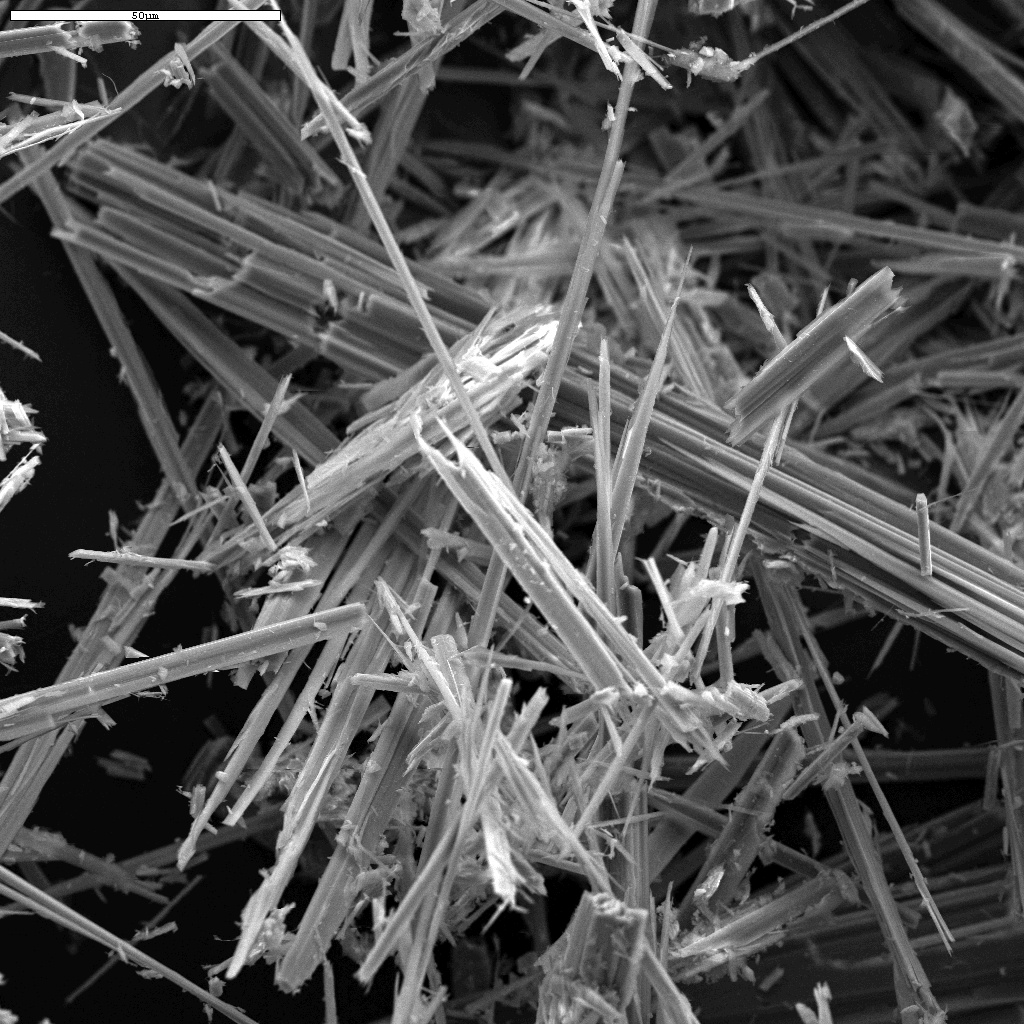
Contrary to what is often believed, the term asbestos refers to a group of naturally occurring minerals belonging to the silicate class. These minerals are composed of long, thin fibres characterized by high strength and durability, as well as fire-resistant, sound-absorbing, insulating, and acid-resistant properties.
What makes it dangerous?
The danger posed by asbestos is closely linked to the ability of asbestos-containing materials to release fibres into the air. Once inhaled, these fibres penetrate deep into the lungs and, due to their high resistance to degradation, the body is unable to eliminate them. Their persistence in tissues leads to chronic inflammation which, over time, can damage cellular DNA and promote cancerous transformations.
Diseases caused by asbestos, also known as asbestos-related diseases, are characterized by a particularly long latency period. They may develop even 30 to 40 years after exposure to the mineral. The risk of developing such conditions increases significantly over time following exposure. Although any contact with asbestos fibres can contribute to the onset of disease, the initial exposure appears to play a crucial role in its development. In addition to respiratory diseases and cancers, exposure to asbestos fibres has been linked to other types of cancer, including those affecting the stomach and esophagus, as well as to other conditions that are not necessarily cancer-related.
As a result, the health risk posed by a product increase with its friability. In some asbestos-containing materials, such as ceiling panels, especially older ones, even minimal disturbance can be enough to cause breakage and release highly dangerous dust into the air. For this reason, improvised removal or remediation efforts are strongly discouraged: simple protective equipment, such as a face mask, is not sufficient to prevent exposure. Moreover, such actions can be harmful not only to the person performing them but also to those nearby, as there is a real risk of contaminating environments and individuals simply by carrying the hazardous dust on clothing or hair.
According to the World Health Organization (WHO), more than 200,000 deaths each year are caused by inhaling asbestos fibres, not to mention the equally significant number of people suffering from asbestos-related diseases.
How did we get here?
The ancient Romans were already aware and made use of asbestos’s extraordinary properties. Its fibrous structure and fire-resistant nature allowed them not only to produce clothing and tablecloths but also to create burial shrouds for cremation rituals. Because these shrouds did not burn, they prevented the ashes of the deceased from being “contaminated.” Not coincidentally, the material’s very name comes from the Greek word asbestos, meaning “perpetual” or “inextinguishable.”
But it was only toward the end of the 19th century that asbestos use expanded on an industrial scale, leading to a true boom in its production. Within just a few decades, the material became a component in thousands of products, including filters, gaskets, and car brakes, to name a few. It was probably in the construction sector, however, that asbestos’s natural properties allowed for its widest use. The material became a central element in common residential structures. Its thermal insulation, fire resistance, sound-absorbing qualities, and remarkable durability led builders to use it in plasters, ceilings, and flooring.
The material’s distribution grew even more in the early 20th century, when the Austrian Ludwig Hatschek developed what is known as eternit. This product, a mixture of asbestos and cement, launched massive industrial production that touched countless construction-related items, including chimneys, pipes, water tanks, and the still-common “corrugated sheets” that often serve as roofs for houses and other structures in many countries worldwide, including Georgia.
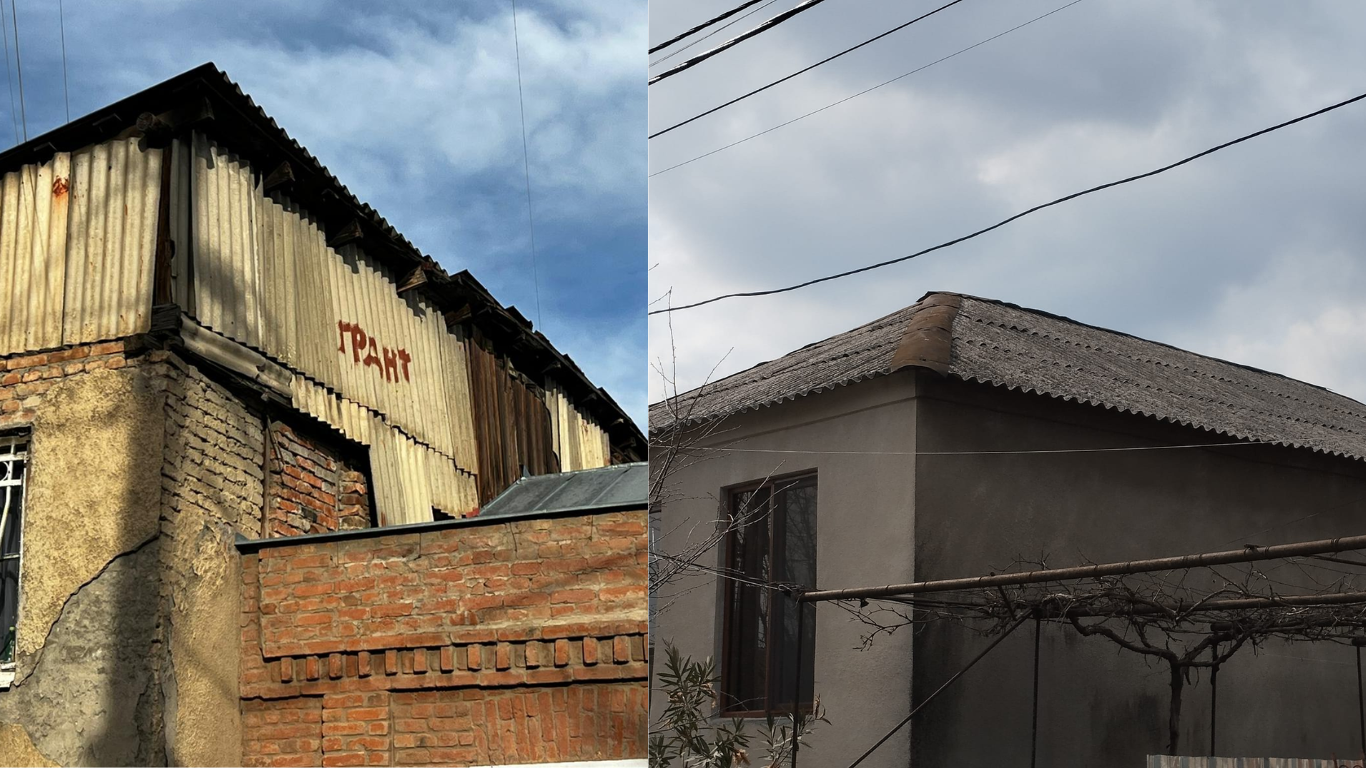
Although eternit products are more durable and therefore “less dangerous” due to their lower friability, over time and under external stresses these materials inevitably begin to crumble, releasing dust and, as a consequence, triggering all the associated risks that come with it.
That said, it is clear that the widespread presence of asbestos or eternit-based products throughout Georgia poses a significant health risk for both residents and tourists. At first glance, the most common asbestos-containing product seen on the streets of the Georgian capital, and also the most easily recognizable, is represented by the so-called corrugated sheets. As shown in Figure 2, these sheets are still frequently used for residential roofing, but not only that. They are also widely employed as “railing covers” for apartment balconies.
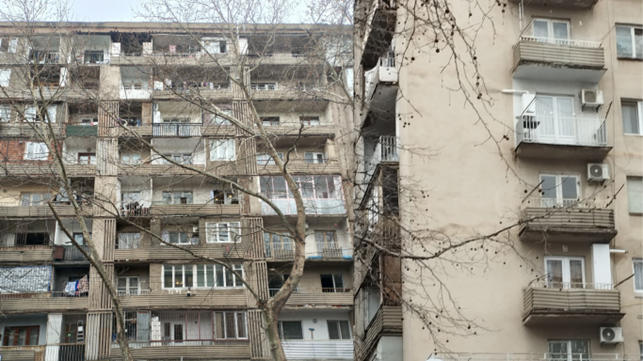
The danger of this practice is easy to imagine. The holes required to secure the sheets, their placement at height, the exposure to the elements are all factors that contribute to the deterioration of the material and the release of dust.
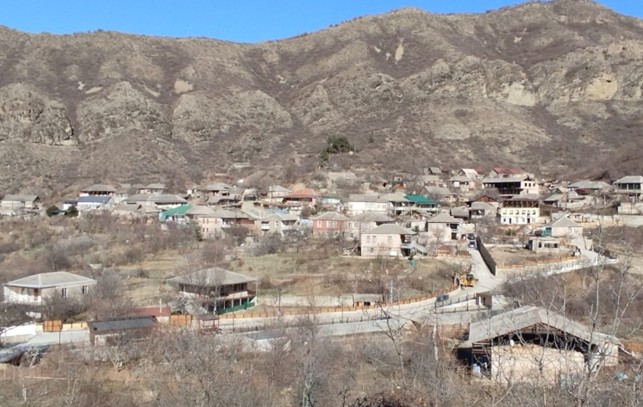
The situation is even more critical in rural areas. Entire villages are often built using eternit as the primary construction material, especially, once again, for residential roofing.
The widespread lack of awareness in the Country about the dangers of this material can create risk situations that go beyond those already discussed. In fact, since asbestos and eternit are often integral components of older buildings, renovation or demolition work carried out without proper safety procedures can release large amounts of dust, which then spreads throughout the surrounding areas.
Therefore, although what has been discussed so far represents only part of a problem that is often less visible - as in the case of asbestos used in automobile brake pads - it is nevertheless clear that there is an urgent need for the competent authorities to promote an information and awareness campaign on the well-established risks of asbestos. This initiative should be accompanied by targeted efforts to remove and properly dispose of the material through operations that, although complex due to the scale of the problem, are both essential and urgent.