The Interview with Erekle Deisadze - Mother Tongue and Father Sound: A Dialogue between Music and Poetry
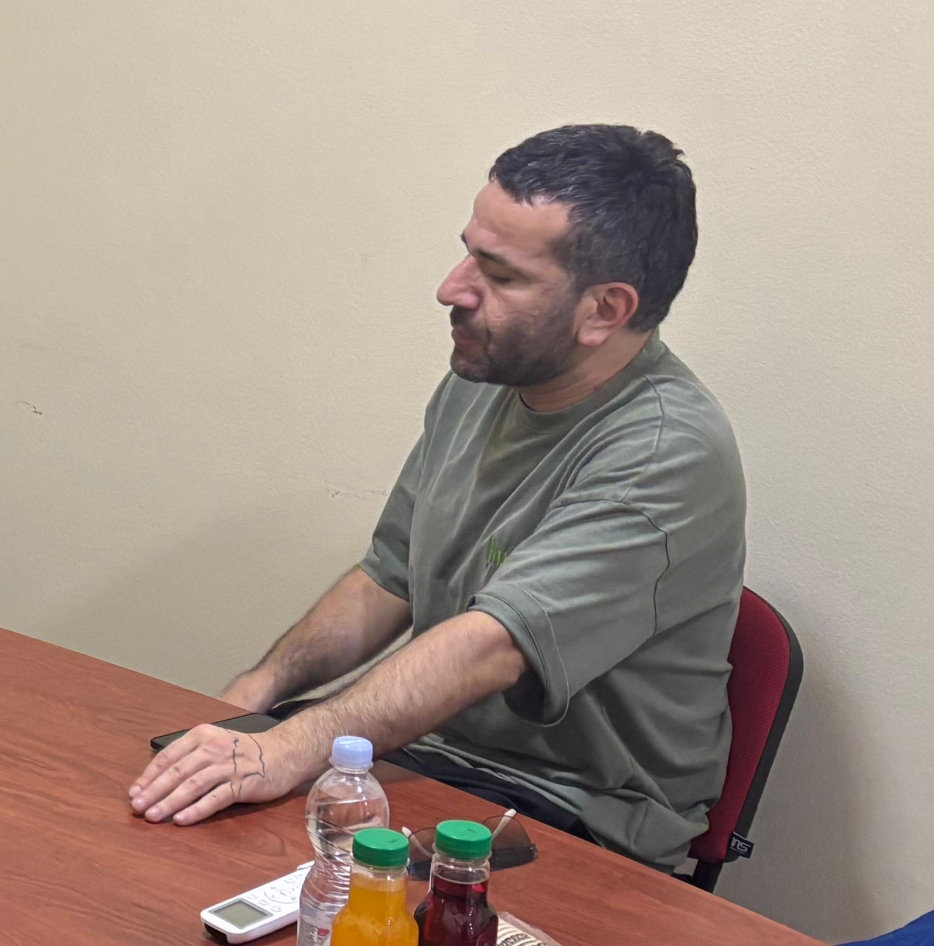 Erekle Deisadze
The Editorial Staff of Kargi Mokalake interviewed the well-known Georgian poet and musician Erekle Deisadze, who spoke about his journey in the arts of poetry and music.
When asked about his first approach to poetry, Erekle pointed out the legacy of poets of his hometown, Kutaisi, and he recited a Georgian saying which explains his relationship with poetry: “Every second person is a poet, and a Georgian poet is twice as much a poet”. He felt that poetry was embedded in his genetics as a Georgian, since Georgia is a country with a rich poetic tradition and where kings were also devoted to this art. Therefore, he decided to “read that genetic code”.
Erekle’s first encounter with poetry was when his great grandmother was teasing him in his childhood with satirical-humorous poems (kafia), which were stimulating a fitting response from Erekle. His first attempt at writing poetry was at school, which inspired him to devote more time to it and turn this hobby into a profession. The kafia’s background is visible in his first poems: vulgar compositions stimulated by his anger towards a school teacher, which made his classmates to laugh. He then “realised the power of poetry [… which] can provoke […] a strong emotional reaction”. At 16 years old, Erekle’s poems started to be published in a local newspaper from Kutaisi after his compositions, reflecting love for Georgia and Kutaisi, were appreciated in school events. At the age of 20, he published the scandalous book “Saidumlo seroba” (საიდუმლო სერობა) containing a pun in his title. He published a total of six books: five short stories and novels, and one collection of poetry. The first books focused on the negative aspects of society to mock them. His second book, “Russian Holidays”, focused on the Russian-Georgian conflict during the August war. His last book, “Citizen of Georgia”, is the author’s favourite as, according to his words, it shows the compassion that was missing in the previous publications. Previously, he focused on topics that would intentionally provoke an aggressive reaction in people, however, with time, a desire for compassion emerged in the poet. While the goal of his first books was to be at the centre of society, he now tries to find compassion with people, instead of conflict. Erekle enjoys to write in two directions: following the romantic nature, depicting the environment; and the political, a sort of activist poetry influenced by the environment. While the first thematic group is connected to feelings, nature and his homeland, the latter has the goal to describe reality sarcastically to spark new discussions. Erekle identified observation as “the only true path to growth […]: discovering poetry in everyday life, and turning fleeting, unnoticed moments into verse”. Moreover, he explained that “poetry demands practice [and] discipline”. He compared talent with flowers, because as flowers need water to grow, talent needs to be nurtured through hard work.
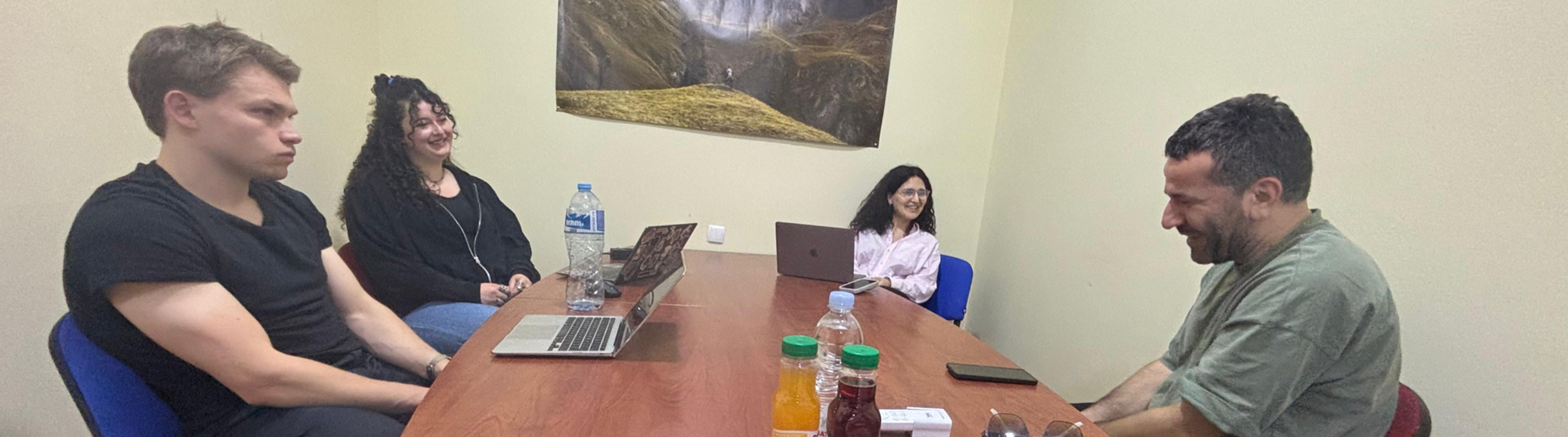 K’argi Mokalake staff interviewing Erekle Deisadze
Around the time of the publication of his first book, he understood his deep interest in poetry, which eventually led him to write music in order to “read poetry in a new way [… and] to make the Georgian language sound differently with melodies”. He wanted to give poetry a different form, and to express his poems in a different way. In fact, Erekle described poetry as a “living organism that can even transform into music”, and in this process he is trying to “reveal the hidden codes of the Georgian language”, giving a new life to words just “like a scientist conducting experiments in a laboratory”. Merging these two arts together, poetry assumed a “new, deeper dimension” for Erekle, allowing him to discover and explore new aspects of poetry. However, a key difference between music and poetry pointed out by Erekle is the way they reach the audience. Concerts allow to interact directly with the audience, as opposed to publications, which may not even ever reach the audience. His first songs can be compared to his first books, as he had the desire to be at the centre of society and to provoke aggression in people. Later, after the meeting with Vinda Folio and the creation of the duo Eko & Vinda Folio, he received international recognition and fame. At the same time, he is continuing his solo career with romantic and hip-hop songs. Now, he plans to release his own version of folklore music, playing even the panduri and other instruments, allowing him to express his own music and the Georgian language in a new way. Similarly as music makes Erekle to feel free, writing is for him a way of freeing himself from the negativity and burdens of life. Writing is therefore a ritual which offers him comforts, creating a dialogue between himself and the paper, but which will be later read by an audience. And that is precisely the power of poetry according to him: to find “intersections between different people” because we all share “common pains and […] joys”. Now, Erekle is working in schools, holding literature lectures focusing on the second half of the 20th century for 9th and 10th graders. He not only wants to prepare them for exams, but also to make them understand literature at a deeper level and to help them in seeing its bigger picture. He finds this as necessary to become a person and a citizen. In fact, Erekle believes that poetry, and art in general, contributes to shape and create the norms and cultural codes that compose society. He sees art as essential for both the physical and spiritual survival of society, as “the well-being of any society is determined by how close it is to art, to the spiritual nourishment that a person needs”.