When talent and dedication meet: interview with soprano Salome Jicia
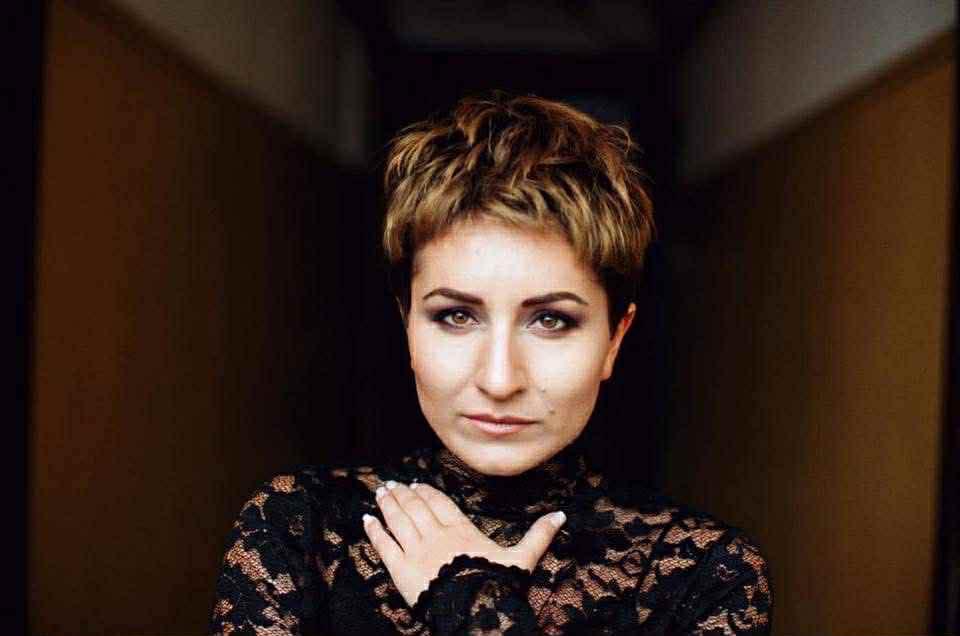
When talent and dedication meet: interview with soprano Salome Jicia
We had the honor of meeting Salome Jicia, the extraordinary Georgian artist whose voice has conquered the world’s most prestigious stages, from the United States to Russia, passing through France and, of course, Italy. Her story is not just a tale of success, but an immersive experience in the world of opera music.
An immersive experience in the world of Opera Music
Passionate about music since childhood, her career as an opera singer would only develop later, at the age of 21, when, trying solfeggio at the conservatory with pieces like Carmen and Cavalleria Rusticana, she became aware of her vocal versatility. “I studied piano for 17 years, between school and the conservatory. As a child, I didn’t imagine a career as a singer. It’s never too late to learn to understand what you want from life.” Her undeniable ability to master her voice like a true instrument is the result of the years dedicated to studying the piano. This solid musical foundation made the stylistic approach to the great composers more fluid. “Stylistically, it is easier to learn composers like Mozart and Verdi when you have a profound musical knowledge,” she explains. Indeed, her repertoire spans the giants of opera history: from Rossini to Verdi and Puccini. A crucial moment in shaping her path was the meeting with the legend Renata Scotto, the figure the artist defines as the most important for her career. “I discovered the true nature of my vocal abilities in Italy, interpreting Rossini in Rome, right during a master class with Renata Scotto,” she recalls. “I was singing Verdi, and she, with foresight, asked me: ‘If you’re already singing this repertoire now, what will you do in the future?’” It was Scotto who directed her towards Rossinian bel canto, assigning her pieces that required virtuosic agility and a wide extension, such as Portami Domani, La Donna del lago, Rondo Finale, and Elena. “The Rondo Finale is traditionally sung by sopranos who also manage low notes well. That natural agility required by Rossini allowed me to explore the world of opera more closely and to understand my true timbre.” Scotto’s influence went beyond technique. “When a legend believes in you so much, it gives you a drive and confidence that are hard to find elsewhere,” she gratefully affirms. Despite her global fame, Italy remains a special and, in some ways, challenging place. “Singing in Italy is always an honor. For Italians, opera is a very sensitive genre,” she concludes. “For this reason, singing here always causes a little anxiety, because the audience’s expectations are much higher.” She then adds: “For any artist, the Teatro della Scala is among the most difficult and emotionally intense. La Scala is an institution for us, an absolute benchmark in the world of opera.”
The relationship between the new generation and the evolution, or drift, of music
In the new generation, the beautiful natural voice loses the important impact and centrality it had in the past; the new genres favored by young people, including trap, demonstrate that singing only requires the use of technical support, such as auto-tune and post-production, diluting the need for authentic vocal preparation. “When you are fortunate enough to hear a natural and authentic voice live, you are almost overwhelmed. A true magic is created, which lasts for four or five hours, without any technical support,” reflects Jicia. “Going to the theatre more often would allow young people to discover beautiful music. In recent years, an increasing presence of the new generation has been noted in Georgian theatres.”
The vital role of the teacher
Finding a good teacher who follows and supports you on this journey is one of the key points, according to the Georgian artist, for a successful musical career. “It is important that your teacher helps you choose the right repertoire. Assigning the wrong pieces does not make the young singer credible, nor does it reflect their personality.” Jicia recalls the decisive moments of her training, citing key figures who guided her towards the great stages. After the impact left by Renata Scotto, a fundamental role was played by Alberto Zedda during the period spent at the Rossini Opera Festival Academy in Pesaro. “After Renata Scotto, Alberto is among the people who helped me the most. He chose me to interpret La Donna del lago at the Rossini Opera Festival, a setting full of international artists,” the artist recounts, highlighting the value of that trust. Before reaching this crucial point in her career, the artist recalls participating in many competitions and auditions. But it was at the age of 27 that she managed to debut in Pesaro. “Society imposes a rush that is unnecessary. There is a need to mature gradually; we must understand where we are and what we like.” In the past, hectic rhythms did not even exist in the musical system. The absence of the frenzy of continuous song publication allowed for greater musical research, benefiting a more refined and profound style of singing. “You can also hear in an artist’s voice how musical times have changed. Increased competition leads to moving away from art. Art is something deeper.”
Dreams, roles, and future: Madama Butterfly and Teaching
After having shone in iconic roles such as Norma, Tosca, and Violetta, Salome reveals that there is still room for Madama Butterfly in her repertoire dreams. Finally, the artist contemplates the future, confessing: “For a musician, it is difficult to accept that a time will come when they can no longer sing. Probably, given my experience, when the time comes, I will begin to dedicate myself to teaching.”