Interview with Giorgi Balakhashvili - A journey through his poetry
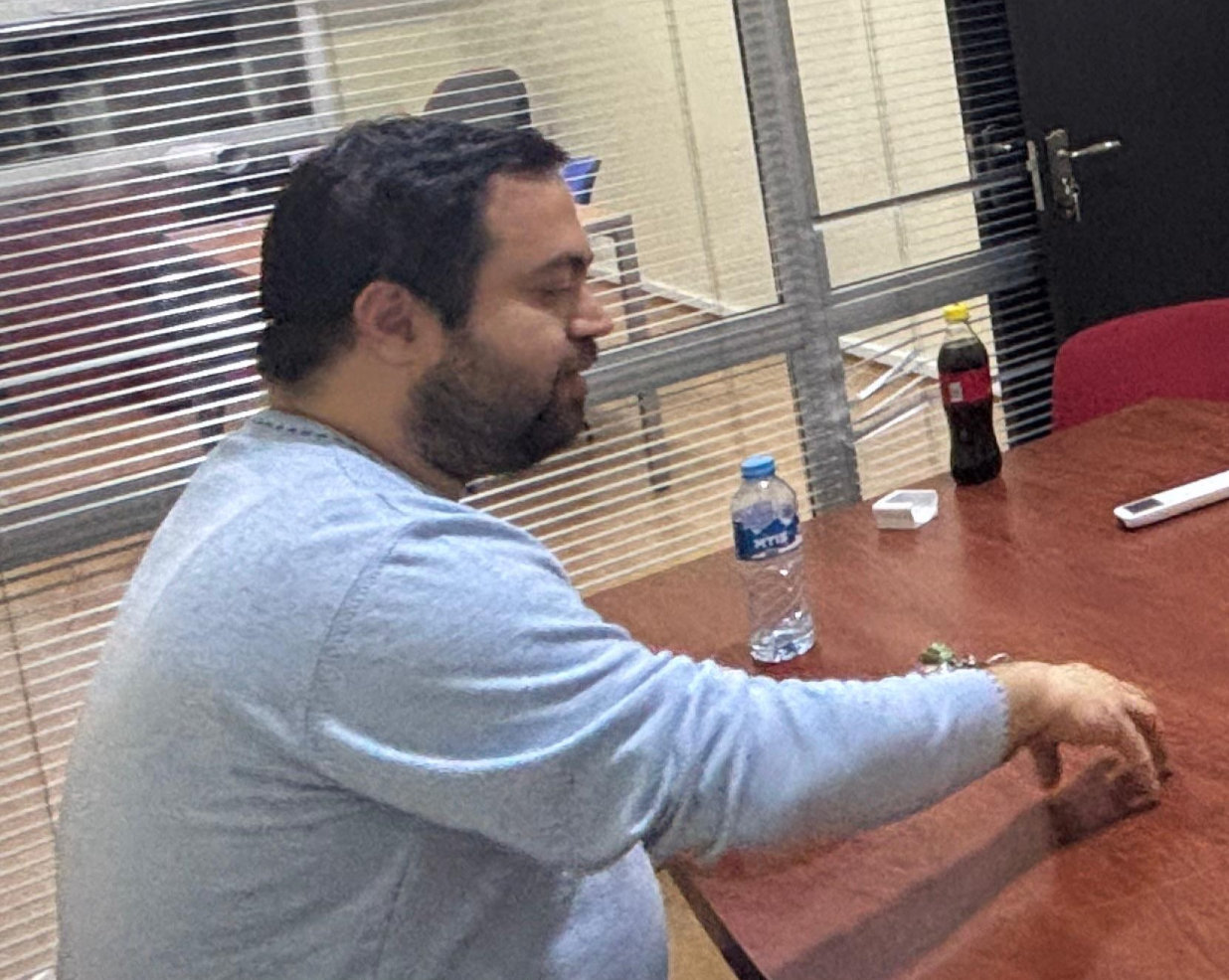 Giorgi Balakhashvili
The Editorial Staff of Kargi Mokalake had the privilege to interview Giorgi Balakhashvili, a Georgian poet, who told us about his writing, the way poetry is linked to his life and projections of some future projects.
Giorgi is a 37-years old insurance agent, he works with car and house insurance and jokes about this aspect: “Maybe it sounds funny - someone who works for an insurance company, insuring cars and properties - writes also poetry“. He reveals that poetry, and writing in general, started as a hobby, but then became something serious: he is been writing for half of his life.
In November 2024, Intelekti published his second book titled “Tilisma”, which has been nominated for the Saba Literary Prize. His first book POSTalionuri, was published in 2015, and was nominated for the Tsinandali Prize in 2016. He told us about the long pause between one book and the other: “There was a long pause between the publication of my first book and my second one, but I console myself with the fact that I have been actively writing during this time”.
His creative journey started at school, when Giorgi would answer assignments through poems, because it was the best tool for him. In particular, he recalls his very first poem, titled „The Fate of a Bird“:
“I’ve always envied the fate of a bird,
I envied it because I wanted to fly,
When the bird asks me: ‘What do you wish for?’
I answer: ‘I wish to fly.’”
When asking about the inspiration to write, how he started, why and how it became is real calling, Giorgi answers that he first started writing about girls: “because I wanted them to admire me and like my poetry. But later, I realized that if I could write about girls, I could also write about nature, about every object I see — or even about things I cannot see”. What started as a way of expression changed when growing up. Giorgi also highlights how rejection of one’s feeling might be the engine for writing. He would say that after gifting chocolates and flowers, he would try finding words to describe his feelings, and there comes poetry. Speaking of inspiration, we wondered whether Giorgi was influenced by someone, he answered that in the time we live it is difficult not to be influenced, and he recalled an episode of sudden inspiration overhearing a conversation. He told us: “I overheard two boys talking. One said to the other: “The fruit trees were afraid of the wind.” For them, this was a common phrase. But for me, these words were very inspiring”. Another example he provided had to do with a poem he unintentionally wrote on Mother’s Day for his mother, while she fell asleep in an armchair. Giorgi also reflected on the difficult period, for any artist, in absence of inspiration. In this situation, he invites artists to wait until the inspiration comes and: “wait for the moment when you can refresh yourself and restart everything from a new page”. The invitation is that of seizing the moment when inspiration comes, because it might slip away for some time.
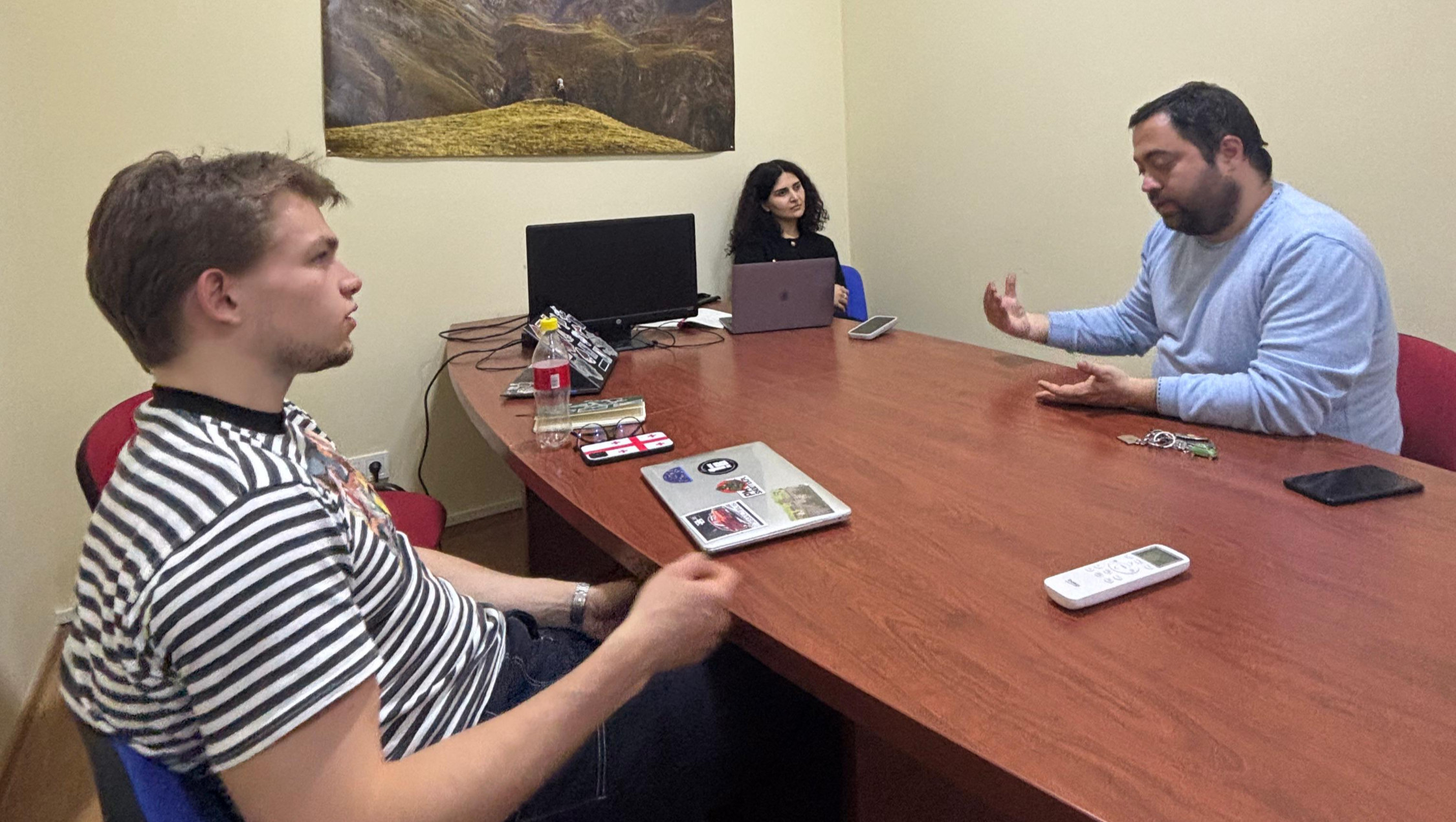 The staff of K’argi Mokalake interviewing Giorgi Balakhashvili
Giorgi revealed to us that he doesn’t have a specific ritual to write, because the Muse, as he calls it, can come at any second. But, once she arrives, he told us: “during the writing process, when I stop and can’t continue, I may play music, especially classical music, and there’s a high chance I’ll find the continuation of the poem“. Balakhashvili told us he can write in any condition, while friends are playing cards, or in the metro, he would start writing. The ritual starts when he lights a cigarette to find the right word, he jokes “it might be a placebo effect”.
While talking, we asked whether Giorgi had inherited his talent in writing by someone in the family, and he told us that his father, Givi Balakhashvili, also wrote poetry. So, he thinks it might have been a talent coming from his parents. He jokes about what his mother says: “my mother, […], says that my father wrote much better than me”. At this point in the conversation, we ask whether Giorgi’s father may have used writing as a way to elaborate their escape from Abkhazia.
Giorgi’s family comes originally from Sokhumi, where his father was a dancing teacher of Georgian dances, a profession he kept all of his life. The poet told us about their difficult escape. In fact, his mother and sister were missing for some time, then his sister remained in a coma for several months. Giorgi recalled his journey through the Chuberi Pass, where unfortunately, a lot of adults lost their lives. Balkhashvili was able to turn this painful experience he lived as a child in a poem he sent us “Ode to Potatoes“. Giorgi told us: “[during the escape, ED] we only had four potatoes and three apples. For one week, we walked on foot through the Svaneti mountains until we reached Tbilisi”. Eventually, they found a shelter in the city thanks to the good deed of a man they met while queuing for bread. Giorgi told us about the importance of his innocence during this episode, as it gave strength to the whole family to reach the capital and pass the mountains.
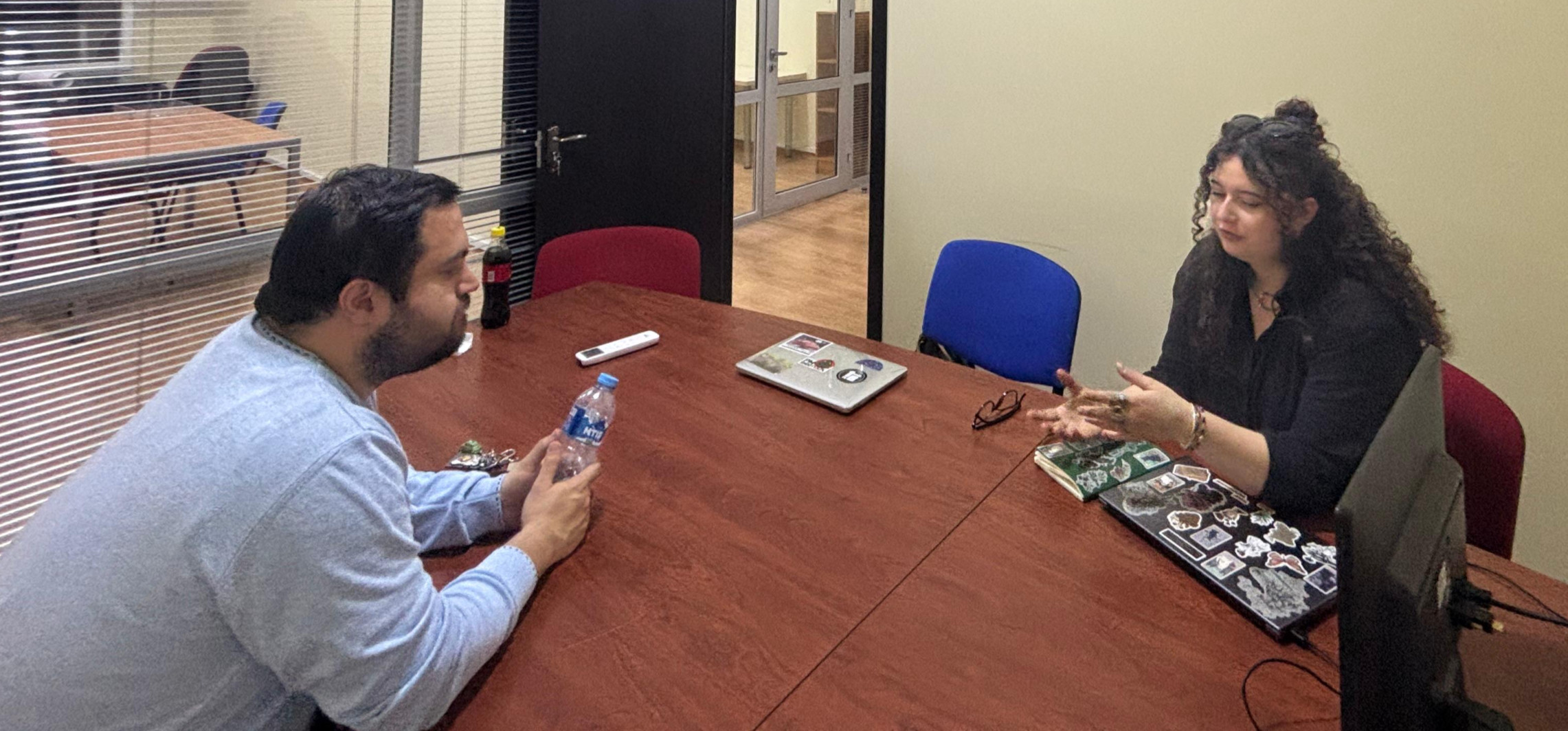 Greta interviewing Giorgi Balakhashvili
Because of his family’s connection with dance, Giorgi is fond of dancing but also told us about his passion for painting. He said: “If I had the option to choose between being a top artist in painting or a top poet in poetry, I would definitely choose painting. I love it very much, and if there is a next life, I hope to be a painter”. We also asked what his relationship with unfinished poems and he answered that he wrote a poem about it:
“You remind me of unfinished poems,
Know that there’s some charm in them too.”
Also, Giorgi likes to keep a note on his phone, he has around 500 words that struck him and with which he would like to work and write about them.
Overall, our conversation with Giorgi Balkhashvili traces his past and newly published works. We extensively wrote about Giorgi’s inspiration and his relationship with writing, as well as his future plans. Giorgi would like to finish prose work and currently has the material to publish other books, including a poetry collection of two lovers exchanging letters. We are curious about the future of Giorgi Balkhashvili as a writer and artist, and we thank him for the time spent together.
Greta Miravalle